What is the most accurate frame measuring system?
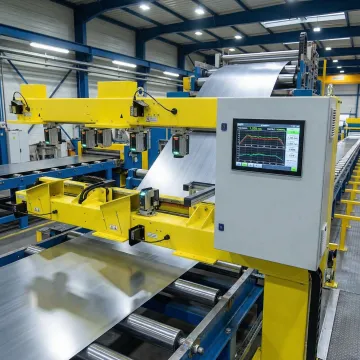
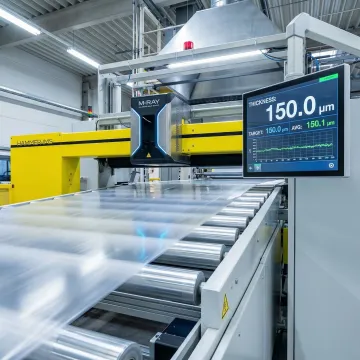
The most accurate O-Frame measuring systems use millimeter wave technology like Hammer-IMS's M-Ray platform. Our multi-sensor approach provides comprehensive cross-machine coverage with multiple kHz measurement rates, enabling detection of local deviations down to individual process parameters. Unlike single-sensor systems, our Marveloc-CURTAIN platform can measure materials up to 30cm thick with fixed or mobile sensors, delivering precision that reduces production thickness margins by approximately 5% according to international standards.
How does contactless measurement compare to traditional gauging methods?
Contactless measurement eliminates physical interference with the production process, preventing surface damage, contamination, or process disruption. Hammer-IMS's M-Ray technology provides consistent accuracy regardless of material color, texture, or temperature, with measurement rates reaching 3 kHz to support line speeds up to 500 meters per minute. Traditional contact gauges struggle with hot materials, delicate surfaces, and high-speed applications where contactless systems excel.
Is the M-Ray technology safe for continuous operation?
Yes, M-Ray technology is completely safe for 24/7 operation. Unlike X-Ray or radioactive isotope systems, M-Ray uses millimeter waves—electromagnetic waves similar to those in cell phones. This non-nuclear, non-radioactive approach requires no special licensing, shielding, or safety protocols, allowing production personnel to work freely around measurement systems without exposure concerns or operational restrictions.
Can O-Frame systems measure multiple material types?
Absolutely. Hammer-IMS O-Frame systems measure plastics (PE, PP, PMMA, PC), textiles, nonwovens, construction materials (MDF, OSB, plywood, mineral wool, gypsum), paper products, and more. The M-Ray technology sees through opaque materials and maintains performance across all colors and filling materials. Each system can be configured with material-specific calibrations for your production portfolio.
How quickly can a system be installed on an existing production line?
Hammer-IMS offers turnkey installations that minimize production downtime. Installation timelines vary by line configuration and measurement requirements, but our experienced team handles mechanical integration, software configuration, calibration, and operator training. We also provide upgrade solutions for existing lines, ensuring compatibility with your current process controls and data systems.
What data outputs and integrations are available?
Our systems provide real-time thickness profiles, statistical process control data, trend analytics, and anomaly alerts. Data integrates seamlessly with Industry 4.0 platforms, SCADA systems, and production management software. The IoT app enables remote monitoring and analysis from mobile devices, while API interfaces support custom integrations. All measurement data can be logged for quality documentation and process optimization.
How does the multi-sensor approach improve measurement accuracy?
Multiple sensors provide increased coverage in the cross-machine direction, capturing thickness variations that single-sensor systems miss. This is particularly valuable for wide materials or processes with multiple extrusion points. The multi-sensor configuration detects local deviations corresponding to individual screws or process zones, enabling targeted adjustments rather than global corrections that may overcorrect in some areas while undercorrecting in others.
What ongoing support and maintenance is required?
Hammer-IMS systems are designed for robust, low-maintenance operation in industrial environments. Our sensor heads withstand harsh conditions including high temperatures, dust, and vibration. Support includes remote diagnostics through IoT connectivity, software updates, calibration verification, and responsive technical assistance. Preventive maintenance requirements are minimal compared to contact measurement systems with wear components.