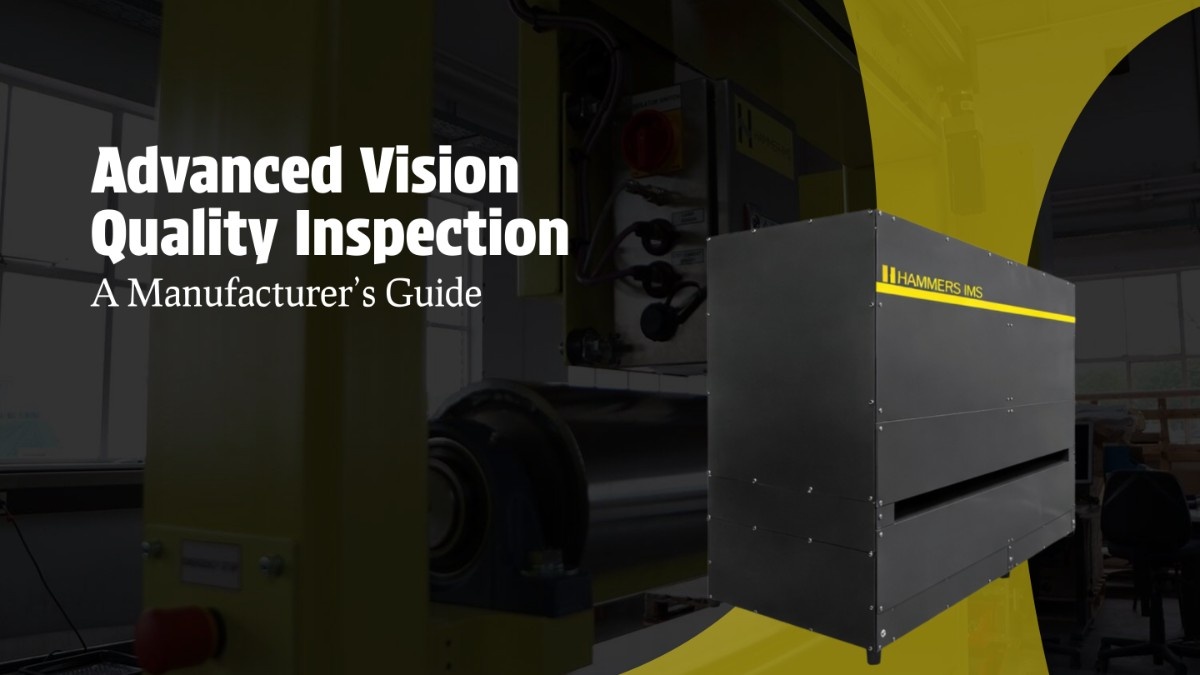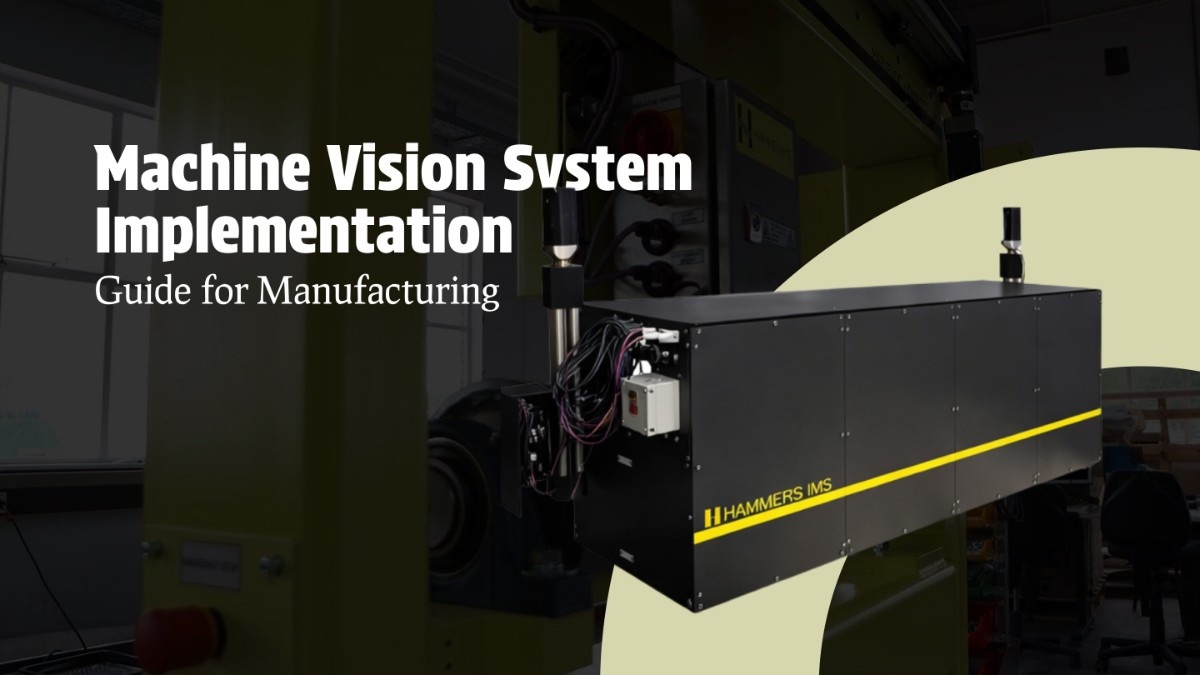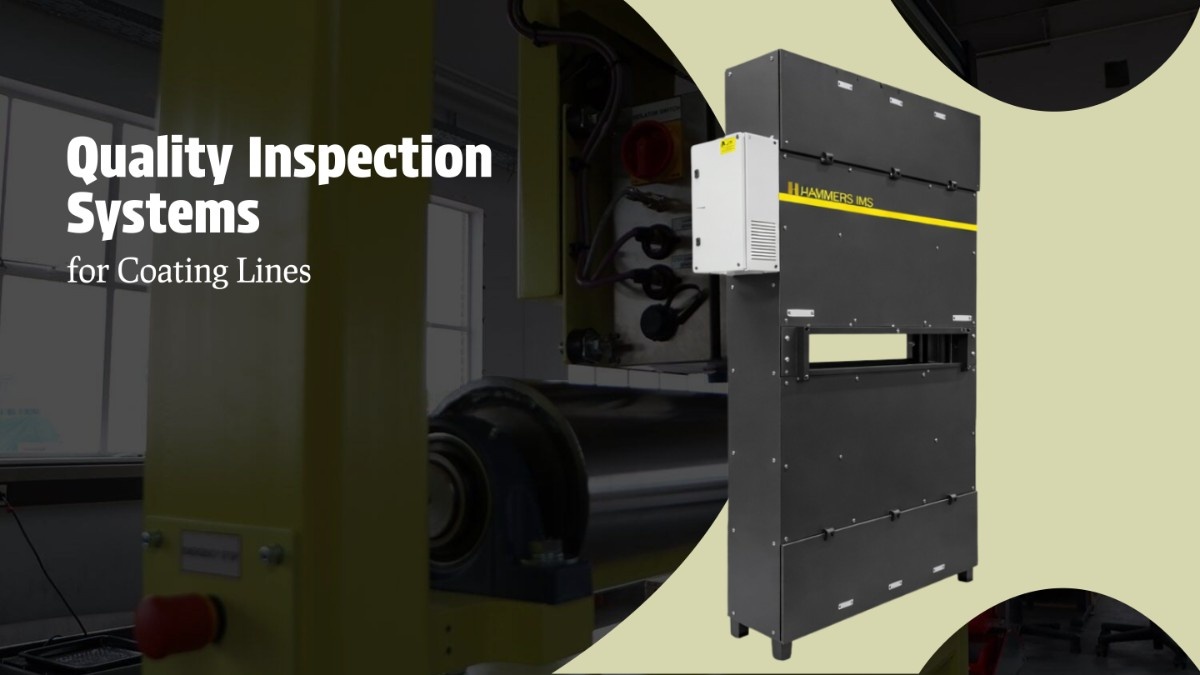
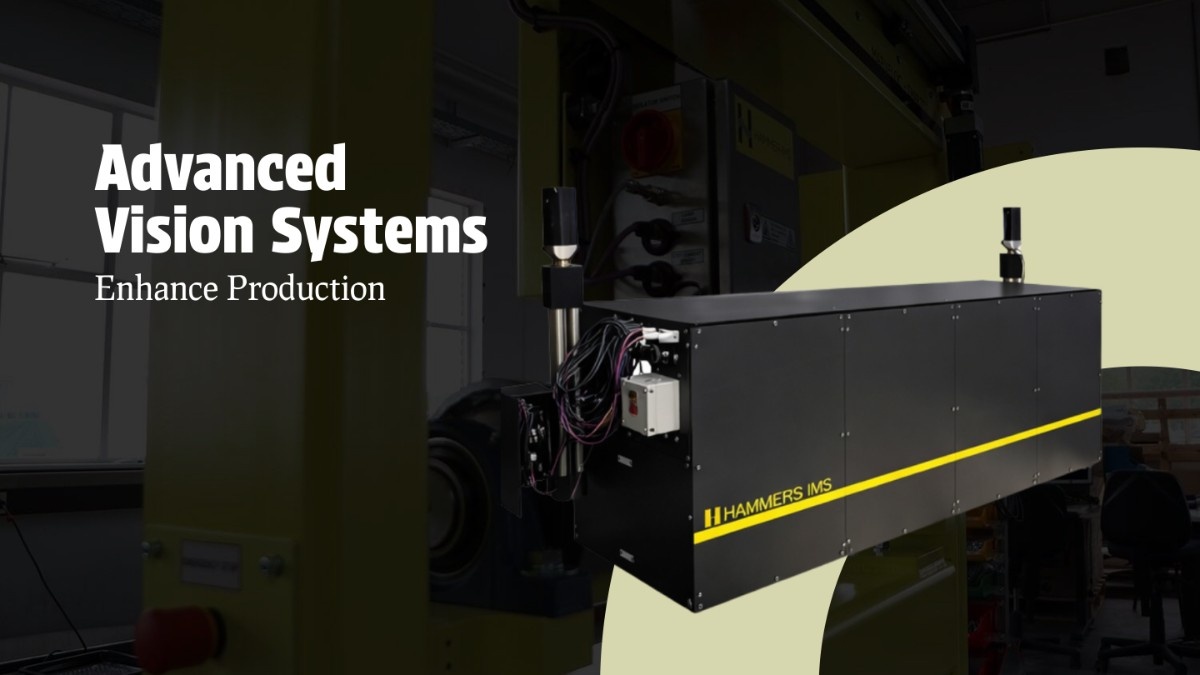
Your lines run fast. Your tolerances are tight. Operators can’t catch everything. Standard cameras miss early drift, and that’s where downtime and rework start. We understand how challenging it can be to keep up with fast production lines while maintaining tight quality standards.
Advanced vision systems help manufacturing plants work efficiently because they catch small issues before they turn into scrap. You see texture shifts, coating changes, or alignment problems right when they appear. Not at the end of the run. Not after a customer complaint.
If you want a clear look at what these systems do and how they support day-to-day production, this blog breaks it down in a straightforward way.
Quick Take:
Faster Problem Detection: Advanced vision systems help manufacturing plants work efficiently because they catch small process shifts before they turn into scrap.
Stronger Fit for Tough Materials: They handle nonwovens, mineral wool, foams, coatings, and fast web lines where basic cameras struggle.
Actionable Insight, Not Just Images: Modern systems interpret changes in real time so operators can correct drift sooner.
Smart Choices Pay Off: The right fit, AI capability, and integration approach can cut rework, reduce operator load, and support steadier output.
Hammer-IMS Advantage: Hammer-IMS delivers vision inspection built for demanding production lines, with optional non-nuclear measurement and clean data connectivity.
What Are Advanced Vision Systems in Manufacturing?
Advanced vision systems give you a live view of what’s happening on the line as the product moves. They don’t just capture images. They interpret them and flag changes that can drift into scrap. Operators get earlier signals, fewer surprises, and steadier output.
Most plants already use simple cameras, but advanced vision systems handle tougher work. They track texture, coating behavior, geometry, and part presence with more consistency than manual checks or basic imaging.
The goal is simple: spot problems early, reduce scrap, and support smoother production.
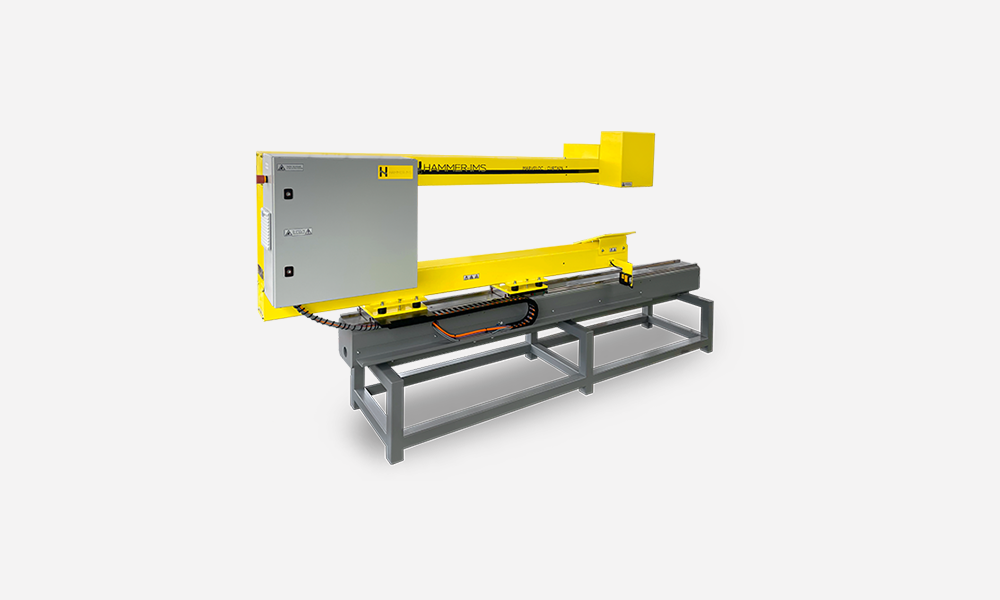
These systems rely on several core elements that work together to capture, interpret, and act on what’s happening in real time. The components below form the foundation of any advanced vision setup.
Industrial Cameras
Built to capture fine details at full line speed. They handle wide webs, fast web movement, glossy surfaces, and textured materials without losing clarity.
Lighting Systems
Stable lighting that cuts through glare, shadows, dust, and fiber noise. The right lighting makes small coating shifts, surface marks, or edge variations easier to detect.
Advanced Optics
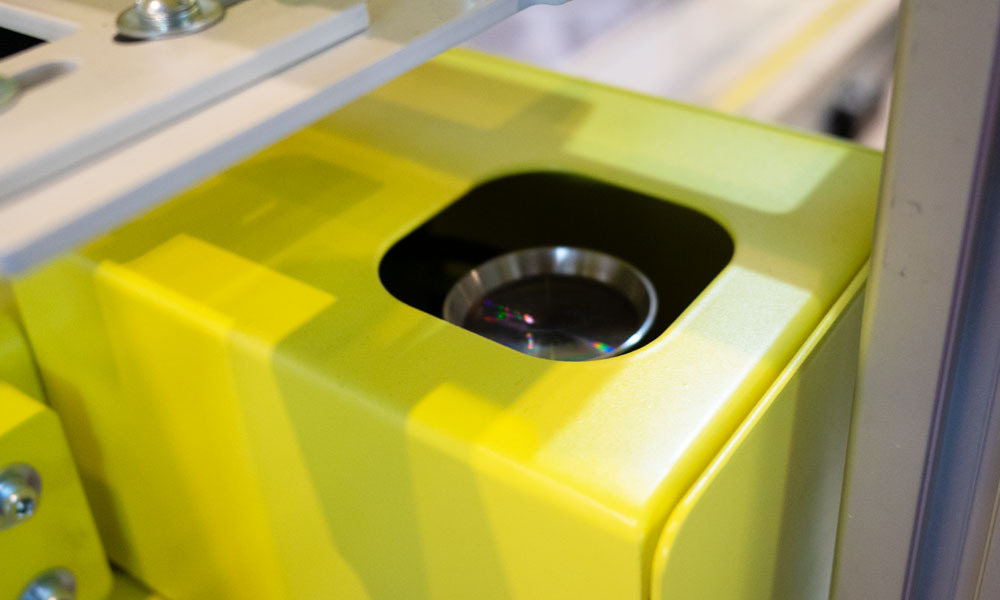
Lenses tuned for the working distance, product width, and defect size you care about. Good optics prevent missed defects and reduce false alarms.
Processing Platforms
High-speed processing units that keep up with continuous production. They handle large image streams without delays so operators see issues when they start, not seconds later.
AI or Deep Learning Software
Software that learns your material behavior and defect patterns. It separates acceptable variation from real problems and helps reduce manual review.
Control and Integration Interfaces
Interfaces that connect to your PLC or MES and give operators simple alerts, dashboards, and quality rules. This keeps your existing workflow intact while adding better visibility.
Once you understand the core components, the next step is choosing a system that fits your process.
What to Look for When Choosing an Advanced Vision System
Choosing an advanced vision system starts with understanding the problems you need to control on the line. Every process has its own challenges. Some struggle with surface variation. Others deal with coating drift or alignment issues that build slowly over a shift.
The right system should match those needs, run at full speed, and give operators information they can act on without slowing production.
The factors below outline what you should focus on before selecting a system.
Factor | What It Means for Your Line | Why It Matters |
How the system handles “natural variation” | Some materials have fibers, patterns, or texture shifts that aren’t defects | Avoids constant false alarms that slow operators and hide real problems |
Whether it can see early drift, not just finished defects | Detects pattern changes, consistency shifts, or small deviations before they hit tolerance limits | Helps stop scrap at the source rather than flagging it too late |
Performance at full production speed | Image quality stays stable even when the line accelerates or material tension changes | Reduces blind spots during start-ups, ramp-ups, and recipe changes |
Tolerance to harsh or unstable environments | Works despite vibration, dust, humidity, glare, or variable lighting | Keeps inspection reliable on real lines, not just controlled test setups |
How quickly operators can interpret alerts | Clear visual cues and classifications instead of overloaded dashboards | Reduces decision time and helps shift teams act before scrap builds |
Ability to adapt to frequent product or width changes | Minimal reconfiguration when switching SKUs, colors, coatings, or textures | Fits plants with short runs or mixed production instead of slowing changeovers |
Compatibility with existing data workflows | Exports data cleanly for QA records, traceability, or customer reporting | Cuts manual paperwork and supports audit-ready documentation |
Once the system fits your line and your defect profile, the real value shows up in daily production.
Practical Applications of Advanced Vision Systems
Advanced vision systems help manufacturing plants work efficiently because they catch the small shifts operators rarely see in time. A slight change in surface texture, a coating line that starts to wander, an edge that drifts a few millimeters. These early signs often predict the scrap that shows up later in the run.
When you see them as they happen, you keep the process steady instead of fighting surprises at the end.
The applications below show where these systems make the most impact in day-to-day production.
Application | Real-Life Use Case | Why It Matters on the Line |
Surface inspection | Detecting fiber clumps or surface dents in mineral wool and glass wool boards | Prevents full board rejection and reduces downstream trimming rework |
Coating uniformity checks | Spotting thin coating zones on XPS boards or uneven binder application on nonwovens | Helps operators correct settings earlier before coating defects spread across the web |
Dimensional verification | Tracking width drift on nonwoven webs or edge wander on foam sheets | Supports consistent product fit for lamination, cutting, or downstream conversion |
Inline thickness and basis-weight support | Monitoring foam thickness variation or basis-weight shifts in filtration media when paired with advanced sensors | Helps maintain stable product performance and reduces scrap from off-spec mass |
Defect classification with AI | Classifying repeating blemishes in acoustic panels or identifying pattern-related defects in coated substrates | Makes it easier to trace issues back to process settings, contamination, or material variation |
High-speed part verification | Checking presence and orientation of components in gasket, insulation, or laminated assemblies | Reduces manual checks and catches assembly errors that typically appear only during packaging or customer inspection |
Different plants face different quality challenges, and not every vision system can handle wide webs, textured materials, or high-speed lines.
Hammer-IMS focuses on these tougher scenarios and builds systems that give operators clearer insight and faster feedback.
How Hammer-IMS Enhances Manufacturing Productivity with Advanced Vision
Hammer-IMS builds vision solutions that hold up on real production lines where speed, dust, fibers, glare, and vibration are part of the job. The goal is simple: give operators clearer insight into what’s happening so they can correct issues earlier and keep output steady.
Here’s what Hammer-IMS brings to manufacturing teams:
Edge-Vision-4.0 for Surface and Edge Inspection
High-resolution imaging paired with AI detection tracks surface defects, coating changes, and edge drift as they appear on fast-moving materials.
Strong Performance on Difficult Materials
Nonwovens, mineral wool, foams, and coated substrates often confuse basic cameras. Hammer-IMS systems are designed to read these textures without flooding operators with false alarms.
Inline Measurement + Vision When Needed
Plants that also need thickness or basis-weight insight can combine vision with non-nuclear M-Ray measurement for a more complete quality view across the web.
Mechanical Platforms Built for Industry
C-frame and CURTAIN setups stay stable at high speed and fit easily into tight spaces. This reduces installation complexity and keeps inspection close to the point where variation begins.
Connectivity for Operators and QA Teams
Connectivity 3.0 gives teams real-time alerts, defect logs, and access to the data they need for audits or root-cause checks. No extra manual reporting.
If you want to see how this fits your material and line setup, book a demo with Hammer-IMS and walk through your application with the team.
Conclusion
Advanced vision systems help manufacturing plants work efficiently because they catch the small shifts that usually slip past manual checks. As materials get more complex and tolerances tighten, plants need inspection that keeps up with real production, not ideal conditions.
Hammer-IMS supports that needs with systems built for tough materials, fast lines, and the kind of early warnings that make day-to-day work smoother.
If you want clarity on how this applies to your process, reach out to the team for a walkthrough of your application.
FAQs
1. Do advanced vision systems help when my material texture changes from batch to batch?
Yes. These systems can learn different texture patterns and spot the changes that matter without flagging normal variation. This reduces false alarms during grade or supplier switches.
2. Can advanced vision systems keep up with line speed changes during start-up or ramp-up?
Most setups handle full-speed imaging, but the key is how stable the image stays during acceleration. Systems designed for manufacturing environments maintain clarity even when tension or speed shifts.
3. How much operator involvement is needed once the system is running?
Advanced vision systems help manufacturing plants work efficiently because operators only need to respond to alerts and review snapshots instead of tuning the system or interpreting raw images.
4. Can these systems support audits or customer claims without extra paperwork?
Yes. They store defect images, timestamps, and trend data, so QA teams can pull evidence quickly without digging through manual logs.
5. What if my plant runs multiple SKUs and frequent changeovers?
Advanced vision systems can store recipes, lighting profiles, and AI models for each product. Changeovers stay quick and consistent across shifts.