Quality issues don’t wait. They don’t pause a production line, tap you on the shoulder, or politely announce they’ve just turned a perfect batch into scrap. They happen fast, sometimes in milliseconds, and in modern manufacturing, milliseconds matter.
In fact, human inspectors miss 20–30% of defects due to fatigue and attention drift, a gap only automation can close reliably.
Customer expectations continue to rise, tolerance for defects continues to decrease, and consistent, accurate inspection is no longer optional. It is a requirement for modern manufacturing.
This guide shows how machine vision systems operate, why they’re transforming quality control, and the key factors to know before you install one.
At a Glance:
Clear Quality Advantage: Machine vision systems deliver real-time, high-precision inspection that helps manufacturers catch defects early and stabilize production.
Built for Tough Materials: Films, foils, coatings, composites, and fast web lines benefit most from advanced vision and measurement working together.
Beyond Seeing: Modern systems interpret, measure, and react instantly, turning inspection into actionable process control.
Smarter Deployment Wins: The right design choices, integration, and KPIs can significantly reduce scrap, downtime, and manual oversight.
Hammer-IMS Edge: Hammer-IMS combines machine vision with non-nuclear measurement and Industry 4.0 connectivity to give manufacturers a powerful, inline quality control solution.
What Are Machine Vision Systems?
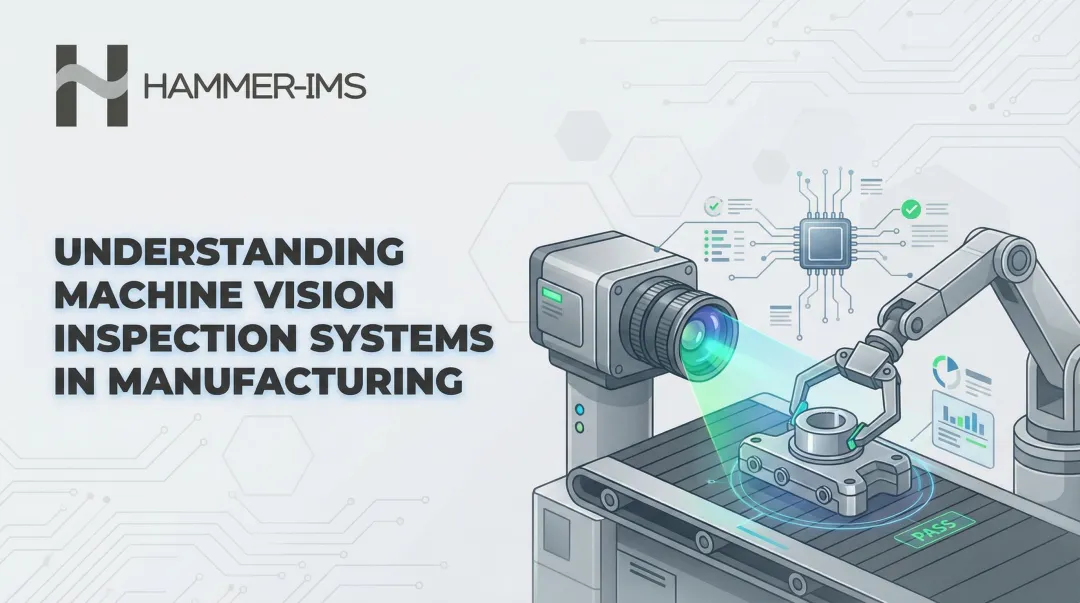
Machine vision systems are automated tools that inspect and measure products directly on the line. Think of them as the always-awake eyes of your operation: they never blink, never get distracted, and rarely miss what manual inspection often does.
But many manufacturers deal with more formidable challenges: tight tolerances, coated surfaces, films, foils, composites, and fast web lines. In these cases, simply “seeing” isn’t enough.
That’s where advanced systems, like the ones built by Hammer-IMS, step in.
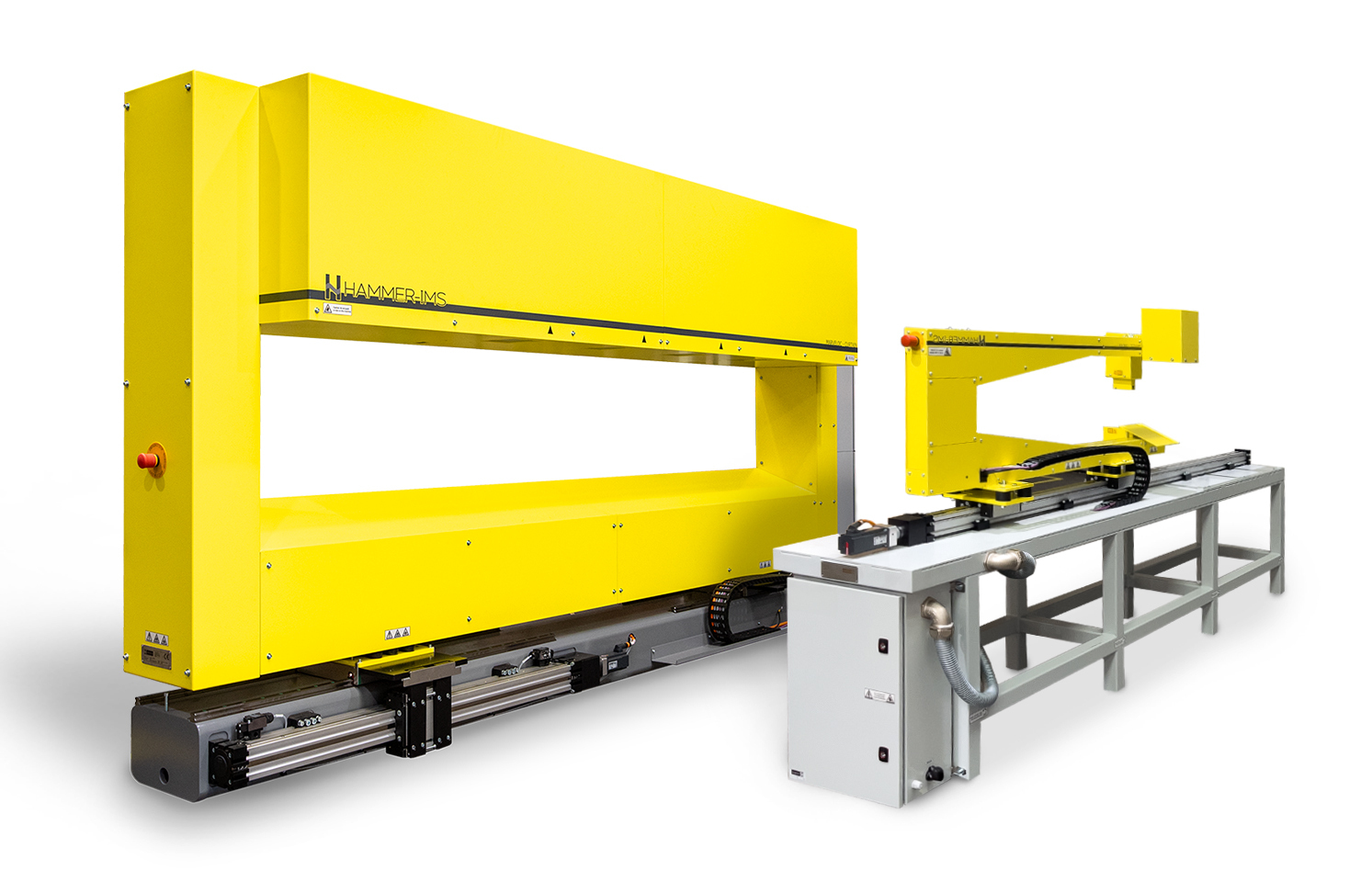
They don’t just capture images. They interpret them. They measure them. And they react in real time to maintain quality.
Here are the core benefits manufacturers can expect, adapted from industry-leading guidance and aligned to Hammer-IMS capabilities:
Higher Accuracy and Repeatability
Machine vision systems inspect products the same way, every time. They help reduce human error, eliminate subjectivity, and maintain consistent inspection quality across all shifts.
Faster Throughput Without More Labor
Automated inspection keeps pace with modern production speeds, especially high-speed webs, without adding operators or slowing the line. This supports higher output while maintaining quality.
Improved Defect Detection
Machine vision catches issues too small, too fast, or too inconsistent for manual inspection. This includes surface defects, edge variations, and micro-defects on films or foils.
Reduced Scrap and Rework
Early detection minimizes the amount of defective material produced. By identifying problems at the point of origin, manufacturers can intervene before defects multiply.
Better Process Control
Vision systems collect consistent, real-time data. Trends show whether a process is drifting. Combined with inline thickness or basis-weight measurement, this creates a stronger foundation for closed-loop control.
Enhanced Compliance and Traceability
Automated inspection ensures quality records are complete, consistent, and automatically logged: supporting audits, certifications, and customer requirements.
Lower Operational Costs Over Time
By reducing false rejects, improving inspection accuracy, and minimizing downtime, machine vision contributes to long-term savings across labor, material, and rework costs.
Now that we’ve covered what machine vision is and the benefits it delivers, the next step is understanding what actually makes these systems work on a real production line.
Key Components of a Machine Vision System
Every machine vision system, whether used for films, foils, coatings, composites, or nonwovens, relies on a coordinated set of technologies that must work together at high speed. Each component plays a specific role in capturing accurate images, analyzing defects, and supporting real-time quality decisions.
To understand how these systems deliver fast, accurate, and reliable quality control, let’s break down the core components of a machine vision system.
1. Industrial Cameras
The camera is the system’s “eye.” It captures the images that drive every quality decision. The right camera ensures even small defects are visible.
Common types:
2D cameras, general inspection, pattern checks, surface defects.
Line-scan cameras are perfect for continuous web materials (a core Hammer-IMS domain).
3D cameras, height, shape, warp, or profile measurements.
2. Precision Lighting
Lighting makes or breaks the entire inspection. Without the proper illumination, defects disappear, especially on glossy, transparent, or coated surfaces.
Lighting methods include:
Backlighting, perfect for edge and width measurement.
Diffuse dome lighting , reduces glare on shiny films or foils.
Dark-field lighting , reveals scratches or small surface disruptions.
Hammer-IMS relevance: Materials like films, foils, and coated webs often require engineered lighting to expose subtle defects at full line speed.
3. Optics & Lenses
Lenses control how the camera sees the surface. They define focus, clarity, distortion levels, and measurement accuracy. High-precision measurement (like Hammer-IMS non-nuclear thickness and basis-weight systems) demands distortion-free imaging.
Key options:
Standard lenses , general inspections.
Telecentric lenses , precise dimensional accuracy with minimal distortion.
4. Processing Hardware
This is the system’s “brain.” It analyzes images and makes decisions in real time. Manufacturing lines move fast. Processing must keep up.
Common processing units:
Industrial PCs , powerful and flexible.
Edge processors , high-speed, low-latency computing close to the line.
GPUs , ideal for AI and deep learning applications.
5. Vision Software & Algorithms
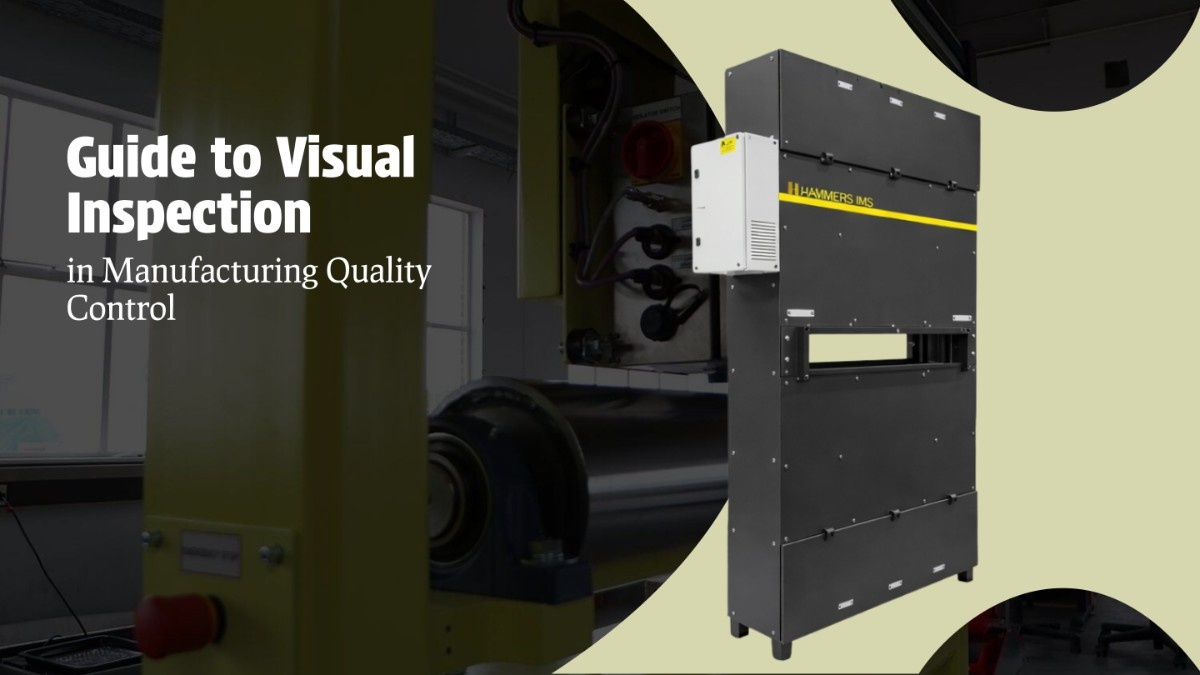
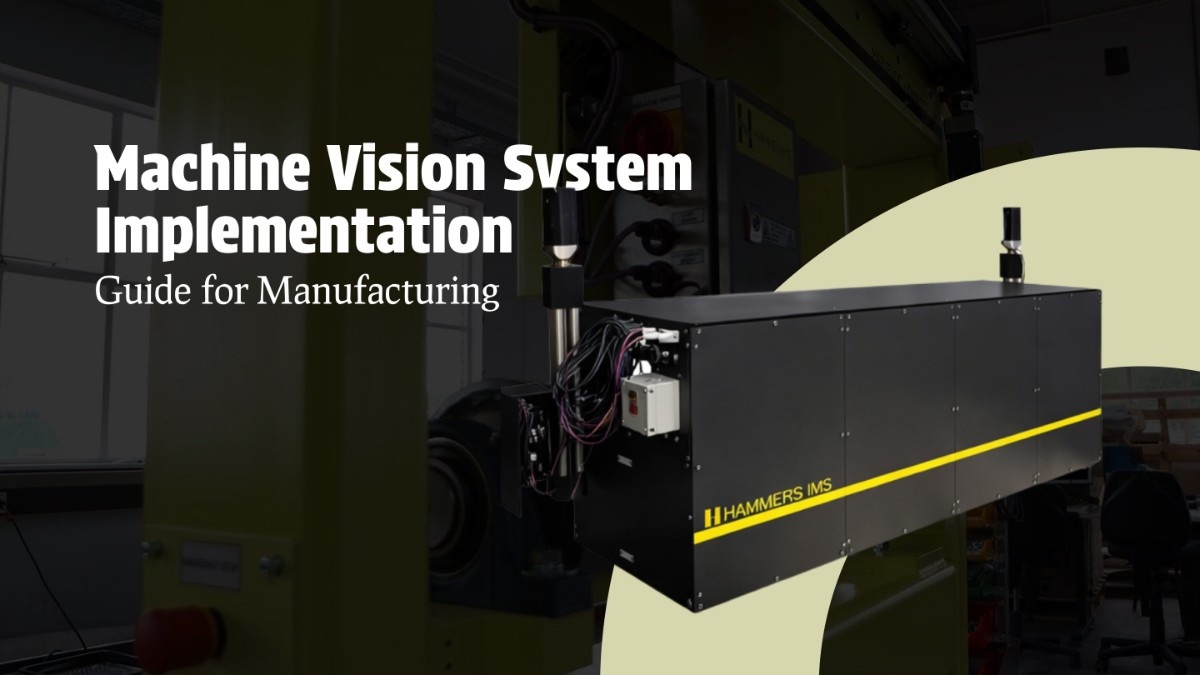
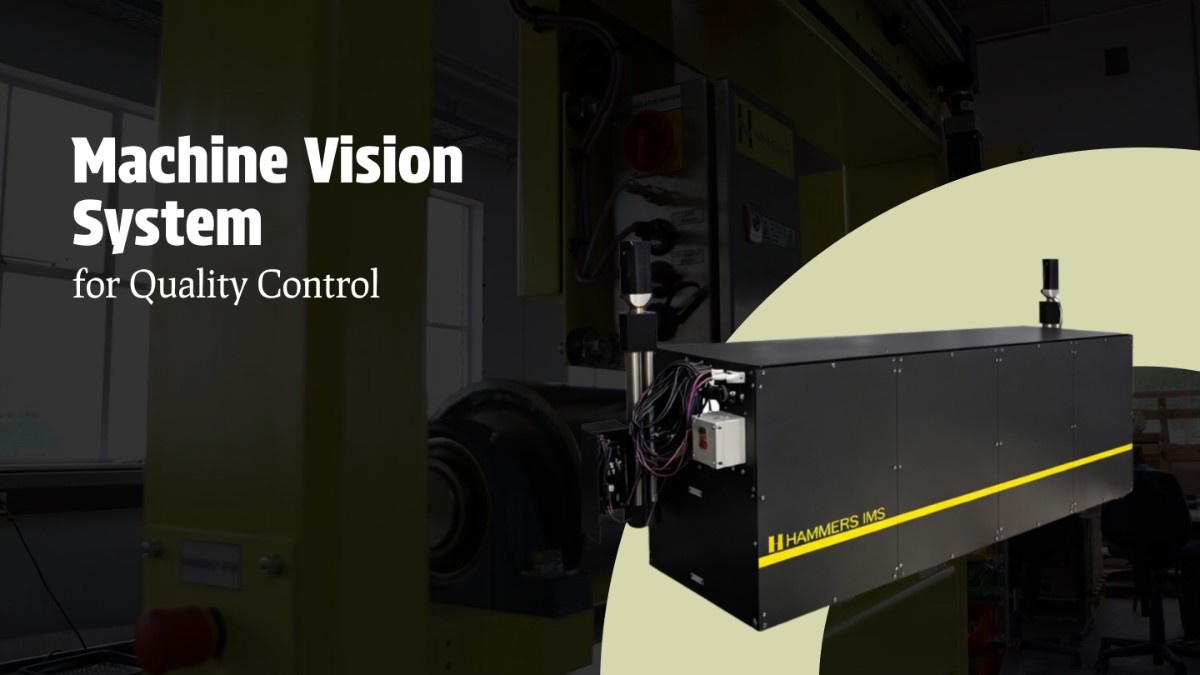
Software transforms raw images into actionable insight. Systems like Edge-Vision-4.0-CURTAIN combine high-resolution vision with intelligent defect classification tuned for high-speed continuous production.
Capabilities include:
Defect detection
Dimensional measurement
Edge/width tracking
Pattern recognition
AI/deep learning classification
6. Integration Interfaces
A machine vision system must communicate with the production environment. Connectivity 3.0 provides real-time dashboards, alerts, and data flows that support smart factory initiatives.
Integration points often include:
PLCs , for line control and triggering.
SCADA/MES systems , for quality records, dashboards, and analytics.
Closed-loop control , automatic adjustments based on real-time measurements.
7. Mounting Frames & Mechanical Architecture
Often overlooked, but critical. The stability and design of the frame ensure accurate imaging and measurement. A stable frame means consistent inspection and reliable data, even at high speeds.
Examples:
C-Frame structures , compact, ideal for space-restricted lines (Hammer-IMS speciality).
CURTAIN frames , wide-width coverage for films, foils, and web materials.
Now that we’ve covered the core building blocks, it’s time to see how everything comes together.
How Do Machine Vision Systems Work?
Machine vision may feel complex from the outside, but the process is surprisingly straightforward. Each system follows the same rapid cycle: see, process, decide, and act. And it does all of this in the blink of an eye, often faster.
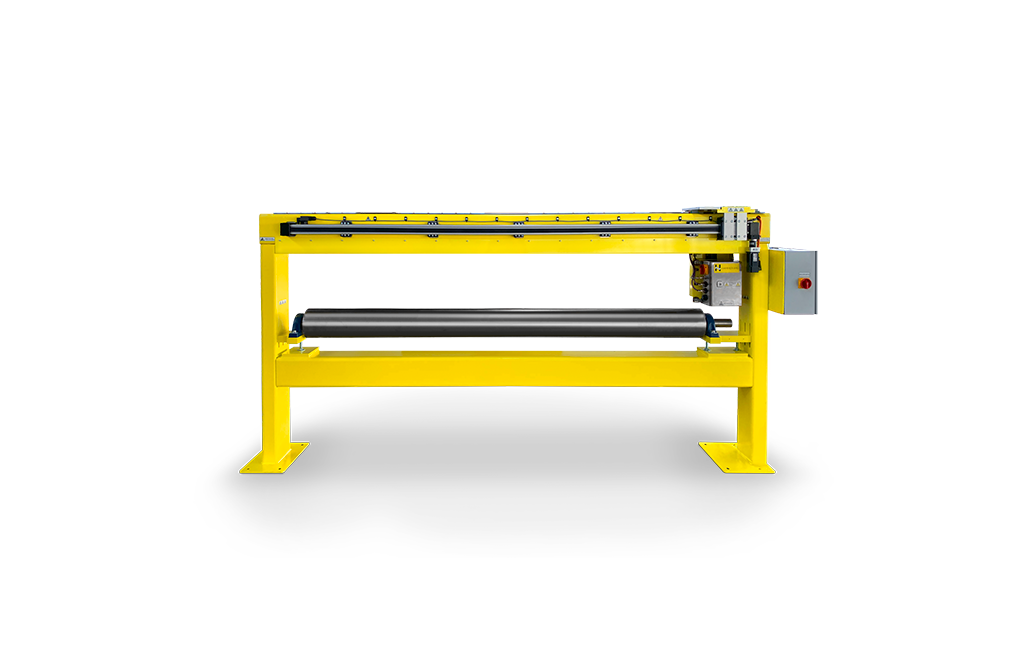
Here’s the simple workflow behind it.
1. Image Acquisition
The system captures high-quality visual data at line speed. What’s happening:
Cameras sync with fast-moving material.
Line-scan systems generate continuous images for wide webs (Hammer-IMS specialty).
Lighting is engineered to expose hard-to-see defects on films, foils, and coatings.
Goal: Get a clean, reliable image, because every decision depends on it.
2. Image Pre-Processing
The system prepares the image for inspection. It performs:
Noise removal
Contrast enhancement
Glare correction
Lens distortion correction
Texture normalization
Why it matters: Many defects only become visible after proper conditioning, especially on glossy or transparent materials.
3. Feature Extraction & Analysis
The system identifies the details that matter. It detects:
Surface defects
Edge and width variations
Pattern or coating irregularities
Texture deviations
(With Hammer-IMS integration) thickness or basis-weight variations
This is where images become actionable data.
4. Decision Logic
The system evaluates the extracted features. It checks:
Tolerances
Defect thresholds
Dimensional accuracy
Trends or drift in the process
AI may step in to identify complex, inconsistent, or subtle defects that traditional rules can’t handle.
5. Real-Time Feedback & Control
Here’s where the system impacts production, not after the batch, but as it’s running.
It can:
Trigger alarms
Correct the process automatically
Mark or divert defective material
Feed data into dashboards (Hammer-IMS Connectivity 3.0)
Enable closed-loop control with measurement + vision combined
This is the core value: better quality, less scrap, and more stable production.
Now that we’ve broken down how machine vision works, the next question is simple:
How do you actually get a system like this onto your line and make sure it delivers real results?
Designing & Deploying Machine Vision Systems for Your Line
Putting a machine vision system into a real production line isn’t just about picking a camera and hitting “install.” Every plant has its own constraints: space, speed, materials, tolerances, and existing automation. And the more demanding the product (films, foils, composites, coatings), the more precise your setup needs to be.
Done right, a machine vision system becomes a quiet engine of stability: fewer defects, fewer surprises, and a line that runs smoother day after day.
Let’s break down how to design and deploy a system that actually works:
Start with the Quality Problem, Not the Camera
Most failed vision projects start with the hardware. Most successful ones start with the problem.
Ask simple but powerful questions:
What defects actually matter?
Where do they originate?
How fast do they appear?
What’s the cost of missing them?
Do you need inspection, measurement, or both?
For manufacturers working with films, foils, coatings, and nonwovens, the issues often involve:
Subtle surface defects
Width variation
Coating uniformity
Basis-weight or thickness drift
This clarity shapes every decision that follows: camera type, lighting, processing, mounting, and integration.
Key Design Considerations
Once the quality goals are clear, it's time to engineer the system around your line.
1. Material Behavior
Glossy? Transparent? Textured? Each material demands unique lighting and camera setups. (Hammer-IMS specializes in these harder-to-inspect materials.)
2. Line Speed
Fast lines require:
Line-scan cameras
Low-latency processing
Stable mechanical frames
Consistent lighting
3. Space Constraints
Most plants don’t have extra room. Compact C-frame architectures (like Hammer-IMS CURTAIN systems) solve this problem without compromising performance.
4. Required Accuracy
Dimensional tolerances? Surface inspection? If measurement is involved, optics, sensors, and lens calibration must be precise, especially for thickness or basis-weight control.
5. Environmental Factors
Heat, vibration, dust, and humidity all impact vision stability. Industrial-grade frames and rigid mounts prevent drift.
Integration with Existing Automation & Data Systems
A machine vision system isn’t useful until it talks to your line. Your integration plan should include:
PLCs for triggers, alarms, and real-time control
MES/SCADA for logging defects and quality trends
Operator dashboards for visibility (Hammer-IMS Connectivity 3.0 excels here)
Closed-loop control for automatic corrections
When vision + measurement data feed into your automation stack, you get:
Faster reaction to defects
Less scrap
More stable processes
Better traceability
Integration is where machine vision becomes process control, not just inspection.
KPIs and ROI for Machine Vision Systems
Machine vision earns its keep when it improves the metrics that matter. Track KPIs from Day 1:
1. First-Pass Yield (FPY): Higher FPY = fewer reworks, smoother flow.
2. Scrap & Waste Reduction: One of the biggest ROI drivers , especially in web production.
3. Defects per Million (DPM): Lower DPM = higher consistency and happier customers.
4. Downtime Avoided: Catching defects earlier prevents long cleanups and reruns.
5. Process Stability: Trend analysis shows whether the line is drifting out of spec.
With vision + non-nuclear measurement combined, manufacturers often achieve faster ROI by eliminating multiple systems and reducing integration costs.
The real advantage comes from choosing a solution built for the realities of modern manufacturing: high speeds, tight tolerances, difficult materials, and zero room for guesswork. That’s exactly where Hammer-IMS stands out.
How Hammer-IMS Elevates Machine Vision Systems
Hammer-IMS builds machine vision solutions designed for real production: fast lines, tight tolerances, and materials that standard systems struggle with. Their platforms don’t just “inspect.” They measure, analyze, and support process control in one streamlined setup.
Here’s what they offer to manufacturers who need reliability and precision:
Inline-ready machine vision: Built for continuous production of films, foils, composites, nonwovens, and coated materials.
Edge-Vision-4.0-CURTAIN: High-resolution surface and edge inspection with AI-driven defect detection.
Vision + non-nuclear measurement: Unique combination of visual inspection with inline thickness and basis-weight measurement.
Compact C-frame and CURTAIN architectures: Easy to install, stable at high speed, ideal for tight production lines.
Connectivity 3.0: Real-time dashboards, alerts, and seamless integration with PLC, MES, and SCADA.
US-focused support: Strong fit for American manufacturing sectors like EV materials, advanced coatings, packaging, and hygiene products.
Ready to see how Hammer-IMS can improve your quality control and production performance? Book a demo and experience the difference firsthand.
Conclusion
Machine vision systems aren’t just about spotting defects; they reshape how a factory thinks, reacts, and improves. The real shift happens when quality moves from a checkpoint to a built-in behavior, guided by data instead of guesswork.
That’s the kind of advantage manufacturers gain when they work with partners like Hammer-IMS, where vision, measurement, and real-time insight come together to strengthen every part of the process.
If you’re ready to see how this approach can elevate your own production line, reach out to us today.
FAQs
1. Can machine vision systems help diagnose the root cause of recurring defects, not just detect them?
Yes. Modern systems can log defect patterns over time, helping engineers identify whether issues originate from materials, equipment wear, environmental shifts, or process drift.
2. How do machine vision systems handle products with natural variation, like textured or fibrous materials?
Advanced algorithms and AI can learn what “normal variation” looks like, so the system doesn’t trigger false alarms while still catching truly out-of-spec defects.
3. Can machine vision systems reduce operator dependency and skill gaps on the production floor?
Absolutely. By standardizing inspection, they remove variability between operators and make it easier for newer team members to manage quality without years of experience.
4. What if a product line needs to change frequently, can machine vision systems adapt fast enough?
Yes. Many modern systems allow rapid recipe changes, adjustable tolerances, and automated reconfiguration so high-mix production doesn’t slow you down.
5. Do machine vision systems help prevent waste before it happens, or only after defects appear?
The best systems provide early warning signals and trend analytics. This allows you to intervene before scrap builds up, reducing material loss and protecting throughput.