Surface defects, pattern deviations, and edge irregularities remain some of the most common causes of scrap and rework in manufacturing. In fact, industry studies show that over 20–30% of quality-related losses originate from issues that automated visual inspection could detect earlier.
This is why many operations leaders are turning to visual inspection systems as a practical way to strengthen quality control. For plant managers focused on reducing scrap, improving first-pass yield, and stabilizing processes, modern inspection systems provide consistent, repeatable results.
With AI, they also support defect classification, trend detection, and faster decision-making across shifts.
This guide explains what a visual inspection system in manufacturing industries does, its components, and how to choose a solution that fits your production environment.
Quick Take:
Clear Quality Advantage: A visual inspection system in manufacturing industries helps teams detect defects the moment they appear, supporting more stable, predictable production.
Designed for Challenging Materials: Nonwovens, foams, XPS boards, mineral wool, rubber sheets, and composites benefit from reliable, high-speed surface and edge inspection.
Beyond Basic Imaging: Modern platforms combine lighting, optics, and AI to interpret patterns and provide actionable quality insights.
Smart Choices Drive Impact: The right system fit—material type, defect requirements, integration, and environment- can reduce scrap, prevent drift, and cut manual checks.
Hammer-IMS Advantage: Hammer-IMS delivers industrial-grade visual inspection systems built for continuous materials, with AI, non-nuclear measurement, and seamless line integration.
What Are Visual Inspection Systems in Manufacturing?
Most defects don’t announce themselves. They slip through fast-moving lines, hide in texture changes, or appear only for a split second. And that split second is often all it takes to create scrap, rework, or a customer complaint.
Visual inspection systems exist to catch those issues the moment they appear. Think of them as an always-on quality partner: scanning, comparing, flagging, and documenting. No pauses. No guesswork. Just consistent monitoring that helps teams stay ahead of defects, not react to them.
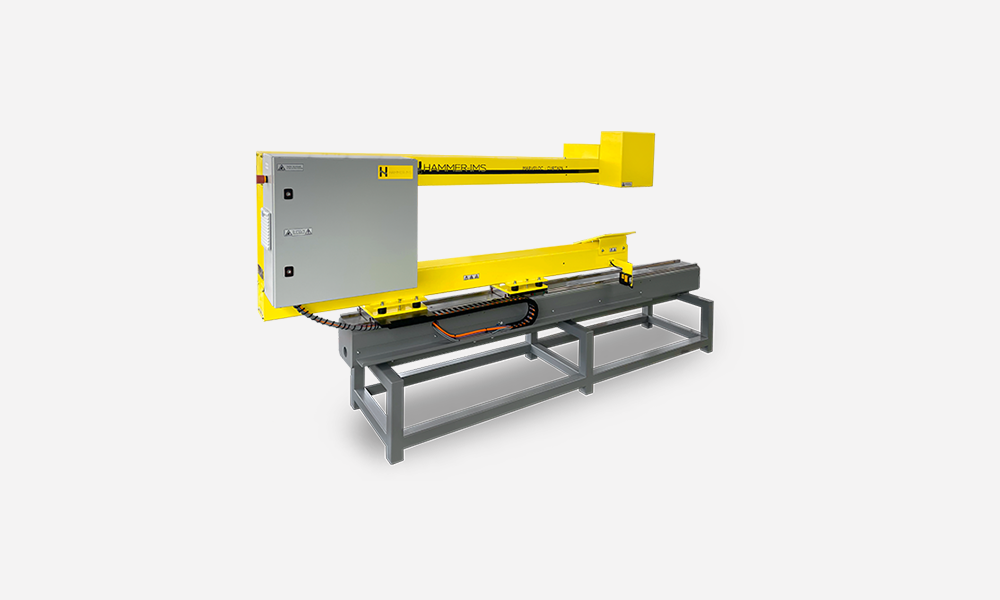
These systems come in several forms, each built for a specific kind of monitoring.
2D inspection systems
Use high-resolution imaging to capture every visible change on the material surface. They help detect issues like fiber clumping, coating gaps, scratches, burn marks, misprints, and pattern deviations.
These systems are often the first line of defense because they work at very high speeds and fit easily into existing lines.
3D inspection systems
Go beyond flat images by measuring contours, thickness variations, edge shape, and surface height differences. They’re valuable when product geometry directly affects performance, such as raised defects, dents, warped profiles, or uneven layering that 2D imaging alone would miss.
Inline continuous inspection systems
Operate without interruption, scanning 100% of the material moving through the line. They give teams a real-time view of defects, drift, and trends across shifts.
This helps reduce scrap by catching defects immediately instead of relying on delayed sampling or offline checks.
AI/deep learning–driven systems
Learn how “normal” material looks and adapt to production variations. They can identify defects that are inconsistent, subtle, or highly pattern-dependent; conditions where rule-based systems often fail.
AI models also support automatic classification, false-positive reduction, and trend analysis for improved process decisions.
Every visual inspection system is only as good as the hardware and software behind it. If one component underperforms, the entire setup can miss defects or generate unreliable results.
Key System Components of Visual Inspection Systems
Every visual inspection system is only as good as the hardware and software behind it. If one component underperforms: lighting, optics, processing, or integration, the entire setup can miss defects or generate unreliable results. That’s why understanding the core building blocks matters.
It helps teams choose systems that stay stable on the line, deliver consistent images, and keep false alarms under control.
Below are the components that determine how well an inspection platform will perform in real production environments.
Component | What It Does | Where It’s Used in Real Production |
Industrial Cameras | Capture high-speed, high-resolution images of the moving product. | Monitoring surfaces for defects on nonwovens, foams, films, rubber sheets, mineral wool, composites, and other continuous materials. |
Precision Lighting | Illuminates the product to reveal texture, edges, and contrast changes. | Detecting fiber clumps, coating gaps, surface scratches, gloss variations, contamination, or burn marks—especially on reflective or porous materials. |
Optics & Lenses | Control focus, depth of field, and the inspected field of view. | Ensuring consistent inspection across wide production lines, uneven materials, or products with height variations (e.g., XPS boards, multilayer laminates). |
Processing Hardware | Executes image capture, analysis, and AI models in real time. | High-speed lines where every millisecond counts—nonwovens, films, extruded materials, calendered sheets, and continuous board production. |
Vision Software & AI | Detects classifies defects, tracks patterns and trends. | Identifying repeating defect patterns, drift events, subtle surface changes and edge irregularities where rule-based systems fall short. |
Integration Interfaces | Communicate with PLCs, SCADA, MES, and plant databases. | Triggering alarms, mapping defect positions, logging quality data, and enabling automatic sorting or process adjustments. |
Choosing a visual inspection system isn’t about picking a camera and calling it done. The right setup depends on your material, your defect types, your line speed, and the kind of decisions you need operators to make in real time.
How to Choose the Right Visual Inspection System
Production lines don’t stay still. Materials shift, textures change, lighting varies, speeds fluctuate, and defect patterns evolve over time. A visual inspection system that works on Monday might struggle by Friday if it isn’t built for those everyday variations.
That’s why selecting the right system is less about “camera specs” and more about choosing a setup that can survive real industrial conditions.
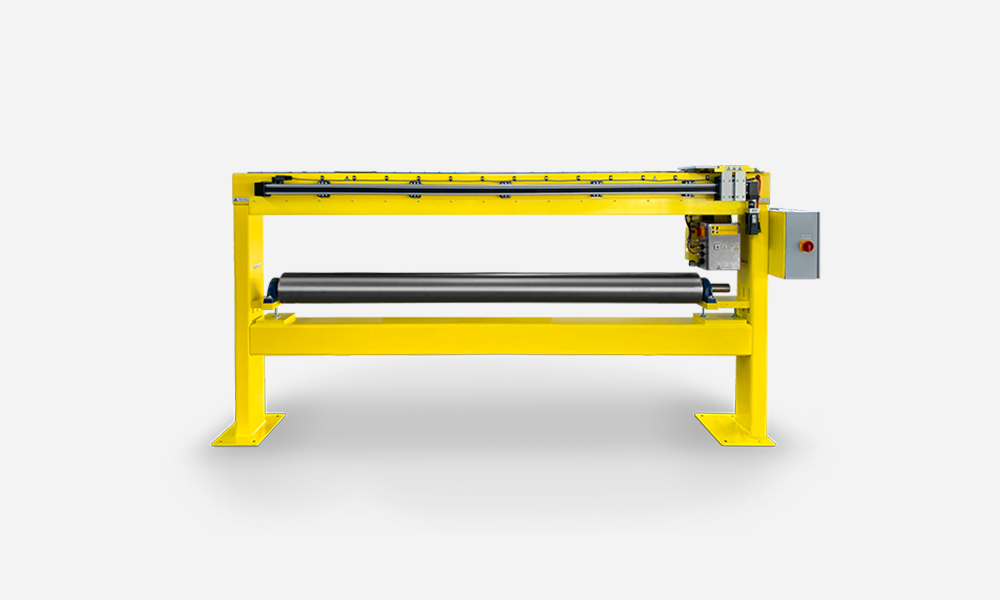
The points below highlight what plant managers and engineers should look at when choosing a system:
Evaluation Factor | What to Look For | Why It Matters in Real Production | Signals You’ve Chosen Correctly |
Material & Application Fit | System proven on your material type: nonwovens, foams, films, rubber, boards, composites. | Some materials absorb light, scatter reflections, or create visual noise. A poor fit leads to missed defects. | Stable detection across shifts, no need for constant retuning. |
Defect Types & Tolerances | Ability to detect surface, texture, edge, geometry, or pattern-based defects at required sensitivity. | If the system can’t “see” your critical defects, it won’t help reduce scrap or rework. | Detected defects match what operators see manually. |
Imaging & Lighting Capabilities | Configurable lighting (diffuse, structured, backlit) + high-resolution imaging. | Lighting reveals defects; cameras only capture what lighting exposes. | Defects remain visible even when material color, gloss, or speed changes. |
AI / Software Capability | Adaptive models that learn from production variability, not rigid rule-based logic. | Real lines change—AI reduces false alarms and adapts to evolving defect patterns. | Fewer false positives week over week; trend detection becomes meaningful. |
Integration Requirements | Simple connection to PLC, SCADA, MES, alarms, or line controls. | Without integration, detection doesn't improve the process—it only creates reports. | Real-time alerts, defect mapping, and automated responses work reliably. |
Environmental Robustness | Hardware rated for dust, fibers, heat, humidity, and vibration. | Many systems fail from contamination or drift, not software flaws. | Calibration stays stable; downtime caused by the system approaches zero. |
Throughput & Speed Compatibility | Ability to process images in real time at full line speed. | High-speed lines easily overwhelm underpowered systems. | No lag, no frame dropping, no inspection “blind spots.” |
Operator Usability | Simple interface, minimal retuning, clear defect visualization. | Complex systems slow operators down or get bypassed. | Operators trust the data and rely on the system during every shift. |
Long-Term Maintainability | Support, spare parts, software updates, calibration stability. | Inspection failures typically happen years later, not on day one. | System remains accurate without constant service calls. |
Most inspection ideas fail on real lines, which is exactly why Hammer-IMS builds from the production environment up.
How Hammer-IMS Enhances Visual Inspection in Manufacturing Quality Control
Hammer-IMS develops visual inspection solutions built for real industrial environments: fast lines, wide materials, challenging textures, and conditions where standard camera systems often lose stability. We help manufacturers detect defects earlier, maintain consistent quality, and support process decisions with reliable inline data.
Here’s how Hammer-IMS strengthens visual inspection on the production floor:
Inline-ready inspection for continuous materials
Designed for nonwovens, foams, XPS boards, mineral wool, rubber sheets, composite layers, and other wide web products where 100% surface coverage is essential.
Edge-Vision-4.0 AI inspection platform
Provides high-resolution surface and edge monitoring with AI-driven defect detection and classification. Helps teams identify drift, repeating defects, fiber clusters, coating voids, and geometry irregularities in real time.
Combining vision with non-nuclear measurement
Hammer-IMS is uniquely positioned to pair surface inspection with M-Ray thickness, basis-weight, and moisture measurement. This helps manufacturers monitor both appearance and material properties in one integrated system.
Flexible mechanical platforms
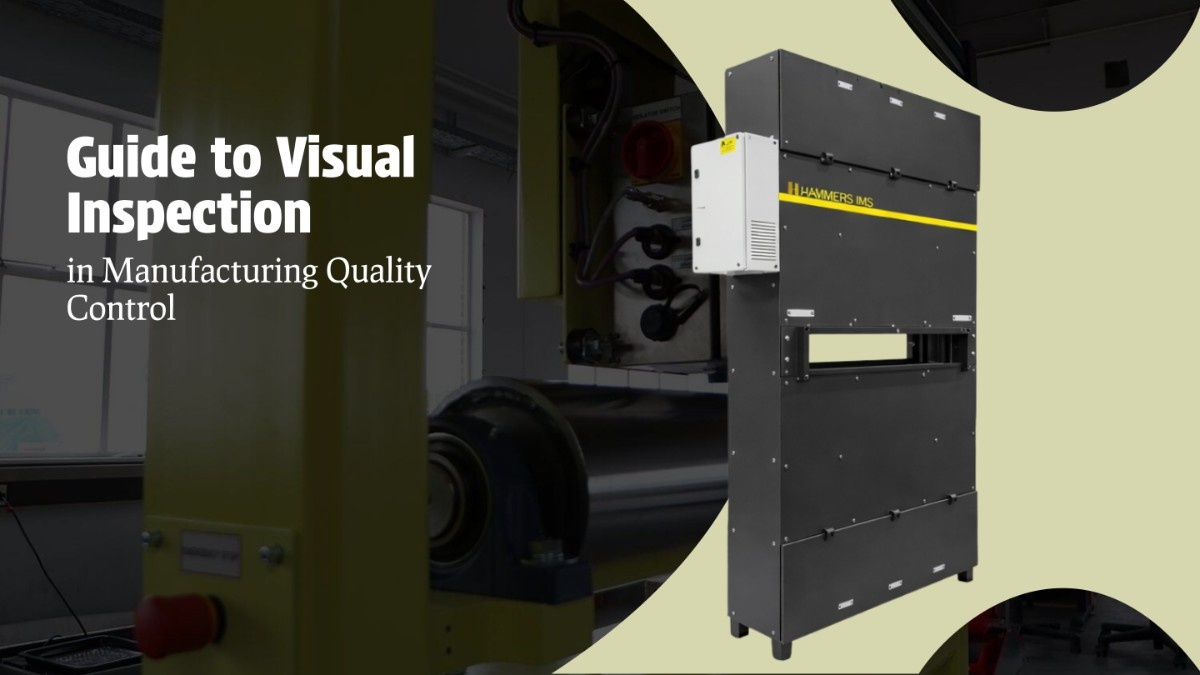
Compact C-frame and CURTAIN architectures support easy installation, stable scanning, and reliable imaging at high speeds, ideal for tight line layouts and wide materials.
Connectivity 3.0 integration
Real-time visualizations, alarms, defect logs, and seamless communication with PLC, MES, and SCADA systems. Operators get actionable insights instead of raw camera output.
Built for demanding production environments
Hardware and lighting configurations engineered for dust, fibers, vibration, and temperature variation, common challenges in insulation, foams, nonwovens, and sheeted material production.
Want to see the system in action? Book a demo to explore how Hammer-IMS can support your production line.
Conclusion
Stronger quality control comes from systems that can keep up with real production, not lab conditions. That’s why manufacturers are turning to partners who build technology around the realities of continuous materials and shifting defect patterns.
Hammer-IMS fits this need by delivering a visual inspection system in manufacturing industries that stays stable, accurate, and remains effective as your production line evolves.
If you’re evaluating visual inspection solutions for your production line, contact our team to discuss requirements and explore the right configuration for your operation.
FAQs
1. How do I know if a visual inspection system in manufacturing industries will actually reduce false positives on my line?
Look for platforms that support adaptive AI models trained on real production data, not just sample images. Systems that learn normal variation on your material typically show the strongest reduction in unnecessary alarms.
2. Can a visual inspection system in manufacturing industries handle frequent product changeovers without constant retuning?
Modern systems can store multiple recipes, adjust lighting or exposure automatically, and apply AI models that tolerate variation. This helps operators switch products with minimal setup time.
3. What internal resources do I need to maintain a visual inspection system in manufacturing industries long term?
Most plants rely on basic operator training and periodic cleaning. Advanced tuning or AI updates are usually handled through vendor support, so you don’t need in-house vision specialists.
4. How do I justify the cost of a visual inspection system in manufacturing industries to leadership?
Frame it around measurable KPIs: scrap reduction, fewer customer complaints, lower rework hours, and better process stability. Real-time inspection often pays for itself by preventing defects that previously went unnoticed.
5. Will a visual inspection system in manufacturing industries integrate with existing quality workflows or create extra work for operators?
Well-designed systems push clear, actionable alerts to the same interfaces your team already uses. Operators should get simpler decisions, not more steps, especially when the system is tied into PLC, MES, or SCADA platforms.