What are the 4 types of quality inspection?
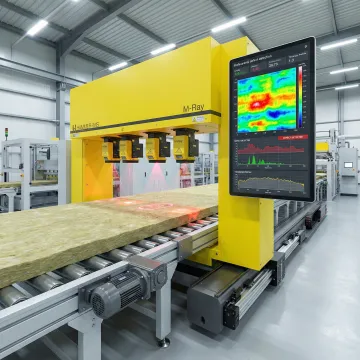
The four main types of quality inspection are: (1) Pre-production inspection, which verifies raw materials and components before manufacturing begins; (2) In-process or inline inspection, which monitors quality during production using systems like our M-Ray technology; (3) Pre-shipment inspection, conducted when production is complete but before delivery; and (4) Container loading inspection, ensuring products are properly packed and loaded. Our inline defect detection systems focus on real-time, in-process inspection to catch and correct quality issues immediately.
What are the three classifications of defects?
Defects are typically classified into three categories: (1) Critical defects, which render products unsafe or unusable and violate regulations; (2) Major defects, which significantly reduce product usability, performance, or appeal and are likely to result in customer rejection; and (3) Minor defects, which represent slight deviations from specifications but don't substantially affect functionality or appearance. Our inline detection systems identify and classify all three types in real-time, enabling immediate corrective action.
How does inline defect detection reduce production costs?
Inline defect detection dramatically reduces costs by identifying quality issues in real-time during production rather than after completion. This enables immediate process adjustments, preventing the manufacture of additional defective products, reducing material waste, minimizing rework, and eliminating costly recalls. Our systems also optimize thickness margins, reducing raw material consumption by up to 5% while maintaining quality standards.
What makes M-Ray technology superior to traditional inspection methods?
M-Ray technology offers significant advantages over traditional methods: it's completely non-nuclear and non-radioactive, eliminating safety concerns and regulatory complexity; it provides contactless measurement, preventing product damage; it can see through opaque materials to detect hidden defects; it operates at kHz measurement rates for high-speed production; and it maintains consistent performance regardless of color or surface conditions.
Can your systems integrate with existing production lines?
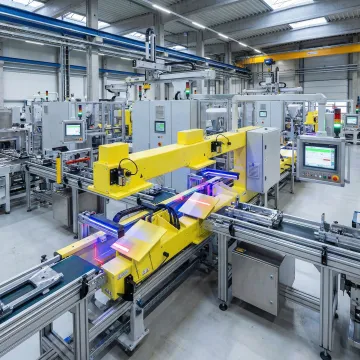
Yes, our defect detection systems are designed for seamless integration with existing production infrastructure. We offer turnkey installations, upgrade solutions for current lines, and OEM modules for machine builders. Our Connectivity 3.0 software provides real-time feedback to production processes, enabling closed-loop adjustments. The systems include API interfaces and comprehensive documentation for smooth integration.
What production speeds can your inline systems accommodate?
Our inline defect detection systems accommodate extremely high production speeds. For example, our paper quality control systems feature 3 KHz measurement rates enabling line speeds up to 500 meters per minute. The multi-kHz measurement capabilities across our product range ensure that even highly dynamic production environments receive accurate, real-time defect detection without compromising throughput.
What types of defects can your systems detect and classify?
Our systems detect and classify a comprehensive range of defects including thickness variations, basis weight anomalies, dimensional deviations, welds and weld points, wrinkles and creases, hidden material defects, local production deviations, surface irregularities, material composition variations, and vibration anomalies. The specific defect types depend on the material and application, with customized detection parameters for each industry.
Do you provide remote monitoring and analytics capabilities?
Absolutely. Our IoT Industry 4.0 application enables remote monitoring of all Hammer-IMS measurement systems from any location. The platform provides real-time access to production data, advanced analytics features for trend analysis, smart factory integration, and comprehensive defect classification reporting. You can monitor quality control across multiple production lines and facilities through an intuitive Android application.