Packaging lines are under more pressure than ever. Higher throughput targets, tighter QA requirements, and growing labor shortages mean that manual inspection is struggling to keep up. According to PMMI, 29.4 percent of CPGs are evaluating the technology, 21.6 percent are piloting it, and 23.5 percent have already implemented it.
That’s a clear signal that manufacturers are moving toward automated tools to improve reliability and reduce quality-related disruptions.
For busy production and QA teams, the goal isn’t to install “new technology.” It’s to solve real operational problems while keeping the line stable, predictable, and running at target speed.
In this guide, you’ll see what it takes to automate packaging inspection with minimal integration effort, and without disrupting production.
Key Takeaways:
Fast Quality Gains: Automated inspection helps packaging lines catch print, seal, and surface defects early, improving yield without slowing production.
Minimal Integration Required: Modern systems mount over existing conveyors and connect via standard industrial protocols, reducing engineering workload and downtime.
Focused, Actionable Insight: Vision, thermal, and dimensional tools provide real-time data that supports process stability, not just defect detection.
Scales With Your Needs: Plants can start with targeted checks and expand to full inspection as requirements grow, without redesigning the line.
Hammer-IMS Advantage: Hammer-IMS delivers AI-driven surface inspection, sensor fusion options, and clean PLC/SCADA integration to strengthen packaging quality with limited disruption.
What ‘Minimal Integration’ Really Means in Packaging Automation
Most packaging lines weren’t designed for today’s inspection demands, which is why integration often becomes the biggest barrier to automation. To automate packaging inspection with minimal integration effort, the goal is to avoid disrupting the line. That means adding an inspection point without moving conveyors, modifying sealing equipment, or rewriting core PLC logic.
For plant managers, this is the difference between a multi-week project and a controlled, low-risk upgrade that fits into a normal maintenance window.
The goal is simple: strengthen defect detection and catch drift earlier while leaving the existing line architecture largely untouched.
In practice, this comes down to a few specific design principles that determine whether an inspection upgrade can be deployed quickly and with low operational risk:
Plug-and-Play Mounting Options
These mounting designs allow inspection hardware to be added without altering the mechanical layout of the packaging line.
Inspection heads mount above or beside the existing product path: Adjustable brackets fit current conveyor spacing: no relocating guides, sealers, printers, or downstream units.
Fits within existing safety guarding: Compact mechanical packages avoid new guarding, safety reviews, or CE/OSHA modifications.
No changes to line centerlines or machine timing: The inspection point overlays the current process, preventing misalignment with sealing, cutting, folding, or printing equipment.
Standard Industrial Protocols for Fast Controls Integration
These protocols let the inspection system communicate with existing PLC and SCADA setups without custom drivers or logic rewrites.
Native communication with common PLC environments: OPC-UA, Ethernet/IP, and Modbus support allows mapping defect signals to existing PLC tags.
Discrete alarms integrated into current reject mechanisms: Use standard I/O to trigger air knives, diverters, or stop-flags; no new sequencing required.
Data packets formatted for SCADA and QA reporting: Defect positions, timestamps, and alarm categories flow into the dashboards operators already monitor.
Lightweight Commissioning With Minimal Tuning
Commissioning focuses on rapid deployment: short setup, limited calibration, and workflows that match existing QA routines.
Predefined inspection recipes for common packaging materials: Recipes for films, cartons, pouches, and printed surfaces reduce initial tuning.
Automatic calibration and lighting adaptation: Eliminates manual fine adjustments during shift changes or minor material variations.
Operator workflows aligned with current QA routines: Alarm categories and dashboards match current practices, reducing training time.
Commissioning that fits normal maintenance windows: Mounting, PLC mapping, and recipe validation can be staged without extended downtime.
Instead of choosing a “one-size-fits-all” solution, teams should match the inspection method to the material, defect types, and quality targets of the line.
Choosing the Right Inspection Technology for Packaging Lines

Not every packaging line faces the same defect risks, and no single inspection technology works for every material. To automate packaging inspection with minimal integration effort, teams need to match the inspection method to what must be detected and how the product behaves at production speed.
The technologies below show how different sensing methods support specific packaging applications:
Vision Systems for Surface & Print Defects
Vision systems are the primary choice when packaging quality depends on print accuracy, label placement, or surface cleanliness.
Detects print drift, missing graphics, and color shifts that lead to customer complaints or rework.
Identifies contamination, scratches, inclusions, and foreign particles on films, cartons, and pouches.
Monitors label alignment and registration without slowing the line.
Supports high-speed production, capturing fine defects reliably at full throughput.
Infrared / Thermal Imaging for Seal Integrity
Thermal-based inspection is ideal when seal strength or heat application consistency affects package reliability.
Reveals under-heated or over-heated seals before they cause leaks or returns.
Captures temperature distribution across the sealing jaw area, showing drift, heater issues, or mechanical wear.
Detects trapped product in the seal zone, a common source of failure in pouches and flow-wrapped products.
Non-contact and inline, allowing validation without slowing downstream operations.
Edge & Dimensional Measurement for Cut, Fold, or Carton Precision
Dimensional checks support lines where packaging geometry affects pack-out reliability or equipment performance.
Tracks edge position, width, and cut quality for films, folded cartons, die-cut components, and sleeves.
Monitors dimensional drift caused by tension changes, worn tooling, or material stretch.
Helps prevent downstream jams or misfeeds by ensuring consistent shape and geometry.
Useful for packaging formats where stability depends on precise alignment, such as multipacks or display-ready cartons.
Sensor Fusion for Reliable Results Across Mixed Materials
Some packaging processes combine reflective surfaces, printed graphics, and variable textures that challenge a single sensor type.
Combines vision, infrared, and dimensional sensing to capture multiple defect categories in one inspection point.
Improves detection consistency on shiny foils, clear films, or materials with variable opacity.
Reduces false positives by validating defects with multiple sensing inputs.
Supports progressive expansion, allowing plants to add new defect classes without mechanical redesign.
Technology selection snapshot for packaging inspection
Technology | Best For | Key Strengths | Typical Materials |
Vision Systems | Surface quality, print/label accuracy | High-resolution defect detection; stable performance at high speeds | Films, cartons, pouches, printed surfaces |
Infrared / Thermal Imaging | Seal validation and heat-based quality checks | Shows seal temperature distribution; reveals sealing drift or trapped product | Pouches, flow-wrap, thermoformed packaging |
Edge & Dimensional Measurement | Geometry-driven packaging stability | Tracks edge position, width, cut quality, and alignment | Webs, die-cut formats, folded cartons |
Sensor Fusion | Mixed defect types or challenging materials | Combines multiple sensing modalities for higher reliability and fewer false alarms | Foils, clear films, multi-layer or reflective materials |
For packaging teams wanting stronger inspection without major line changes, minimal-integration systems offer a practical path forward.
Hammer-IMS builds its solutions around this principle, making it easier to upgrade quality control without disrupting production.
How Hammer-IMS Helps Packaging Manufacturers
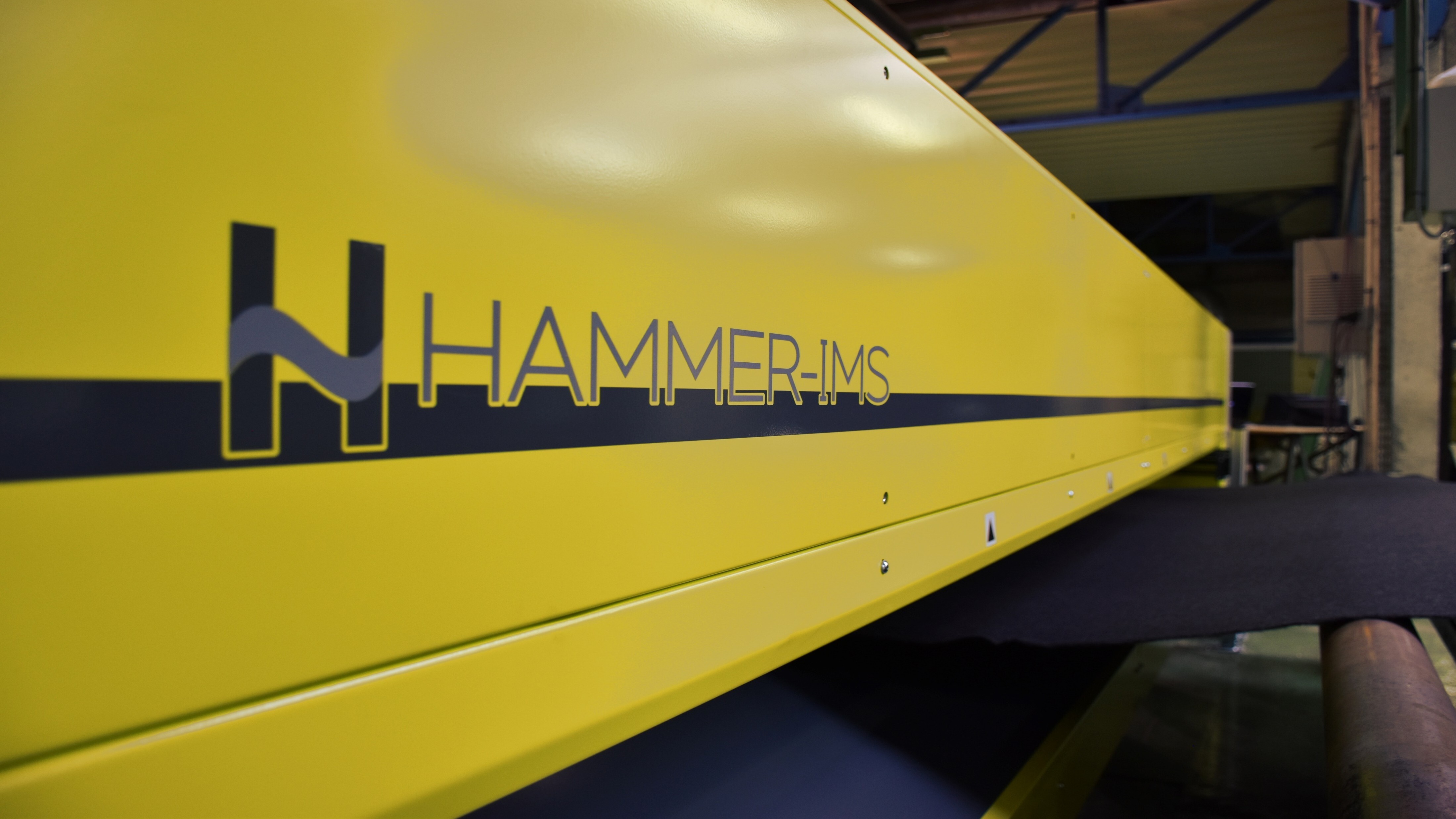
Packaging teams need inspection systems that strengthen defect detection without forcing line changes, long shutdowns, or complex controls work. To automate packaging inspection with minimal integration effort, Hammer-IMS builds its platforms around these constraints: offering inline and near-line tools that install quickly, connect cleanly, and support stable quality at production speed.
Solutions Hammer-IMS provides:
AI-powered surface and print inspection with the Edge-Vision-4.0 platform, including high-precision defect detection, classification, and high-resolution imaging.
Inline measurement configurations for thickness, basis-weight, and dimensional tracking through the Curtain Inline Measurement Products lineup.
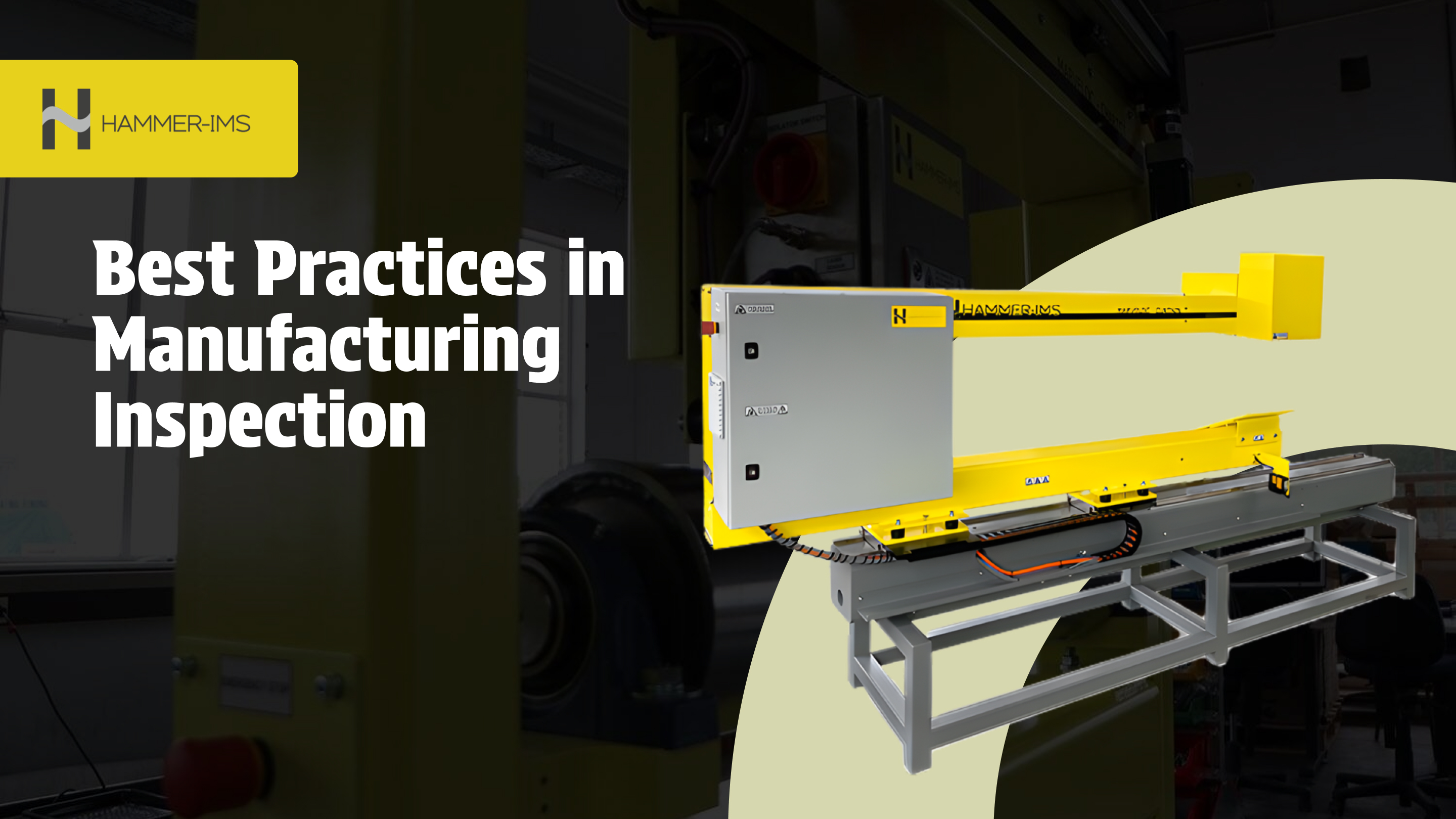
Flexible C-frame and O-frame mechanical setups that mount easily above or around existing packaging paths, available in the Curtain C-frame portfolio.
Standard industrial connectivity via Connectivity 3.0, ensuring smooth integration with PLCs, SCADA, and QA systems.
Sensor fusion options that combine vision, thermal, and dimensional sensing for more reliable detection across mixed packaging materials.
These systems help plants catch defects earlier, stabilize quality, and reduce rework, all while keeping the existing line architecture intact.
If you want to see how Hammer-IMS can support your specific packaging process, you can book a demo to review options and integration fit.
Conclusion
When you automate packaging inspection with minimal integration effort, quality shifts from reactive checks to predictable, built-in control. Data guides decisions, drift is spotted earlier, and operators gain the confidence to run at target speeds without sacrificing consistency.
That’s the value manufacturers unlock with Hammer-IMS: inspection and measurement tools that integrate cleanly, run reliably, and deliver the insight needed to keep production stable day after day.
If you’re ready to explore how this approach can strengthen your packaging line, reach out to us today.
FAQs
Q1: Can we automate packaging inspection with minimal integration effort if our line has frequent changeovers?
Yes. Systems designed for minimal integration can load predefined recipes, adjust automatically to lighting and material differences, and maintain detection stability even when formats or SKUs change multiple times per shift.
Q2: Will automating packaging inspection with minimal integration effort increase the workload on our operators?
Usually the opposite. Operators get clearer alarms, defect visibility, and fewer manual checks, reducing the time spent reacting to issues and allowing teams to focus on running the line.
Q3: How does automating packaging inspection with minimal integration effort help when downstream equipment is sensitive to small variations?
Early detection of minor drift prevents problems from reaching forming, sealing, cartoning, or labeling equipment, which reduces jams, misfeeds, and micro-stops that impact throughput.
Q4: What if our biggest issue isn’t defects but inconsistent supplier materials? Can we still automate packaging inspection with minimal integration effort?
Yes. Automated inspection provides real-time visibility into variation coming from upstream suppliers, helping teams validate incoming materials and adjust line settings before defects occur.
Q5: Does automating packaging inspection with minimal integration effort support traceability for audits or customer complaints?
Most minimal-integration platforms offer image storage, timestamps, and defect logs that help QA teams provide proof of compliance and investigate issues without manual documentation.