What is a multi-sensor system?
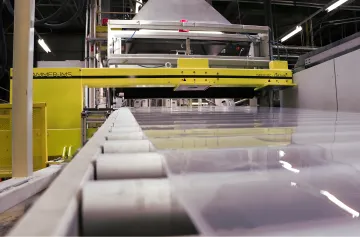
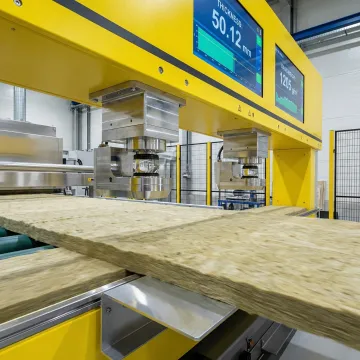
A multi-sensor system uses multiple measurement sensors positioned strategically across the production line to provide comprehensive coverage of the manufactured material. Unlike single-sensor solutions, Hammer-IMS multi-sensor platforms can detect local deviations and anomalies across the entire width of the production, ensuring uniform quality and identifying issues that correspond to specific production elements like individual extrusion screws.
What is a multifunction sensor?
A multifunction sensor is capable of performing multiple measurement tasks simultaneously using a single technology platform. Hammer-IMS M-Ray technology functions as a multifunction sensor, enabling contactless thickness measurement, basis weight determination, dimensional measurement, displacement tracking, and material characterization—all from one sensor head, eliminating the need for multiple specialized measurement devices.
What are IoT sensors in food quality control?
IoT sensors in quality control are measurement devices connected to the internet that enable remote monitoring, data analytics, and real-time process adjustments. Hammer-IMS offers Industry 4.0-ready systems with IoT connectivity through our mobile application, allowing manufacturers to monitor production quality, access analytics, and make informed decisions from anywhere, ensuring consistent quality standards across facilities.
How does M-Ray technology differ from X-Ray or nuclear-based measurement?
M-Ray technology uses millimeter electromagnetic waves—similar to those in cell phones—making it completely non-nuclear and non-radioactive. This eliminates safety concerns, regulatory requirements, and operational restrictions associated with nuclear gauges, while still providing highly accurate measurements. M-Ray systems enable true 24/7 production without radiation exposure risks to personnel.
What materials can multi-sensor quality control systems measure?
Hammer-IMS systems measure a wide range of materials including all polymer types (PE, PP, PMMA, PC), textiles and nonwovens, construction materials (particle board, plywood, mineral wool, gypsum), paper and pulp products, coatings, and more. The technology maintains consistent performance regardless of material color, filling content, or opacity, with measurement capabilities for thicknesses up to 30 centimeters.
Can these systems integrate with existing production lines?
Yes, Hammer-IMS offers turnkey installation services for both new production lines and upgrades to existing facilities. Our systems are designed for seamless integration with standard production equipment, and we provide comprehensive support throughout the installation process. The modular design allows for customization to meet specific production line requirements and spatial constraints.
What measurement speeds can the systems achieve?
Hammer-IMS multi-sensor systems operate at kHz measurement rates, enabling real-time quality monitoring even in highly dynamic production environments. For paper and pulp applications, our systems support line speeds up to 500 meters per minute while maintaining measurement accuracy. The fast measurement rates provide the data density needed for effective closed-loop process control.
Is remote monitoring and analytics included?
Yes, all Hammer-IMS measurement systems can be monitored remotely through our IoT Industry 4.0 application. The app provides access to real-time production data, historical trends, analytics features for identifying production patterns, and alerts for quality deviations. This enables proactive quality management and facilitates data-driven decision-making across multiple production facilities from a single mobile interface.