What is acoustic surface inspection and how does it work?
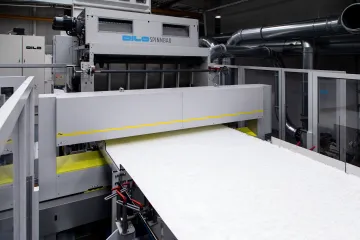
Acoustic surface inspection uses vibration and wave-based sensing to detect deviations, anomalies, and defects on material surfaces without physical contact. At Hammer-IMS, our M-Ray millimeter wave technology captures surface thickness profiles, vibration signatures, and structural irregularities at high measurement rates — up to 3 kHz — providing real-time visibility into surface quality across the full material width.
What types of materials can be inspected using your systems?
Our systems are designed for a wide range of industrial flat materials, including nonwovens, textiles, plastic sheets and films (PE, PP, PMMA, PC), paper and paperboard, mineral wool, plywood, MDF, OSB, gypsum board, and more. The M-Ray technology maintains consistent measurement performance regardless of material color or opacity, making it highly versatile across production environments.
Is the inspection technology safe for continuous use by production personnel?
Yes. Hammer-IMS M-Ray technology is entirely non-nuclear and non-radioactive — it uses electromagnetic millimeter waves, similar in principle to those used in mobile phones. This means there are no radiation safety restrictions, no regulatory exclusion zones, and no limit on operating hours. Personnel can work alongside the inspection system continuously without any health or safety concerns.
Can your inspection systems be integrated into an existing production line?
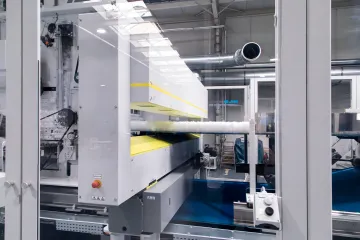
Absolutely. Hammer-IMS supports both new turnkey installations and upgrades to existing production lines. Our sensor heads are available in fixed and mobile configurations, and the OEM M-Ray module is designed specifically for integration into third-party systems. Our engineering team handles scoping, installation, configuration, and commissioning to ensure a seamless fit with your current setup.
How quickly can surface defects be detected and acted upon?
Our systems detect surface anomalies in real time at measurement rates of up to 3 kHz, supporting production line speeds of up to 500 meters per minute. Detected deviations trigger immediate alerts, and through our closed-loop process integration, corrective adjustments can be applied to the production process automatically — minimizing defect propagation and reducing scrap rates without halting the line.
Do you provide remote monitoring and data analytics for inspection results?
Yes. Our IoT Industry 4.0 app enables remote monitoring and analysis of all measurement data from any Hammer-IMS system. Users can track surface quality trends, review historical production data, and access analytics features from a mobile device. This makes it easy for quality managers and process engineers to stay informed and make data-driven decisions, even across multiple facilities.
Which industries and customer segments do you serve?
Hammer-IMS serves manufacturers across a broad range of industries, including textiles and nonwovens, plastic sheet and film production, paper and pulp processing, construction materials manufacturing, automotive acoustic and thermal material production, and medical device manufacturing. Our systems are trusted by major industry names including Owens Corning, Autoneum, Balta, Westlake Plastics, and many others globally.
How do I get started with an acoustic surface inspection solution from Hammer-IMS?
The easiest first step is to book a 30-minute introduction session with our team. Hammer-IMS offers dedicated demo booking for both international customers and those in North America, with available appointment times shown on our online booking calendar. During the session, our engineers will assess your specific inspection needs, discuss your materials and line configuration, and outline the most suitable solution for your operation.