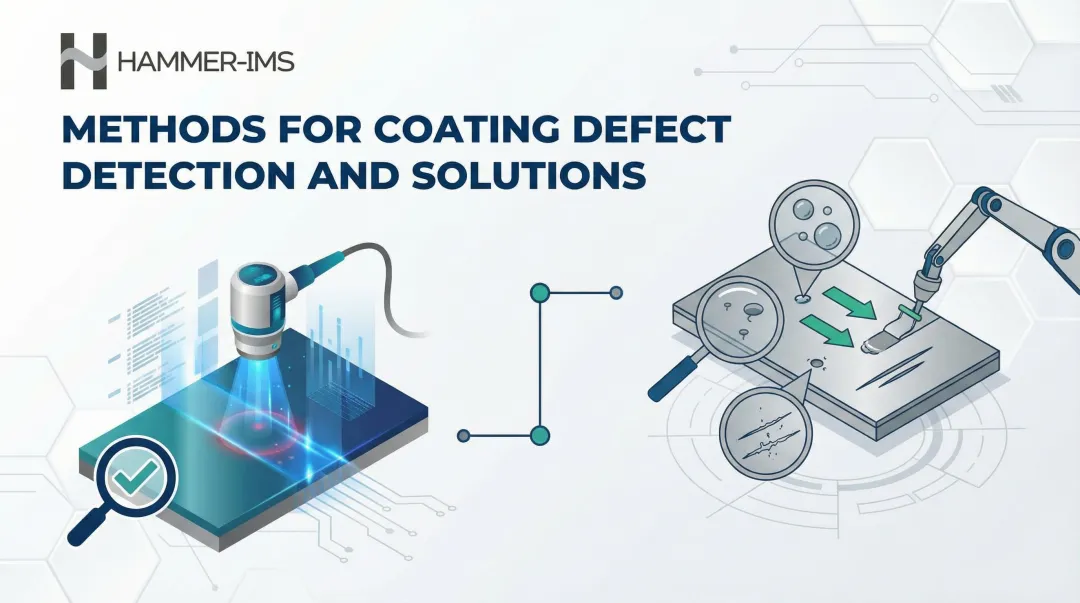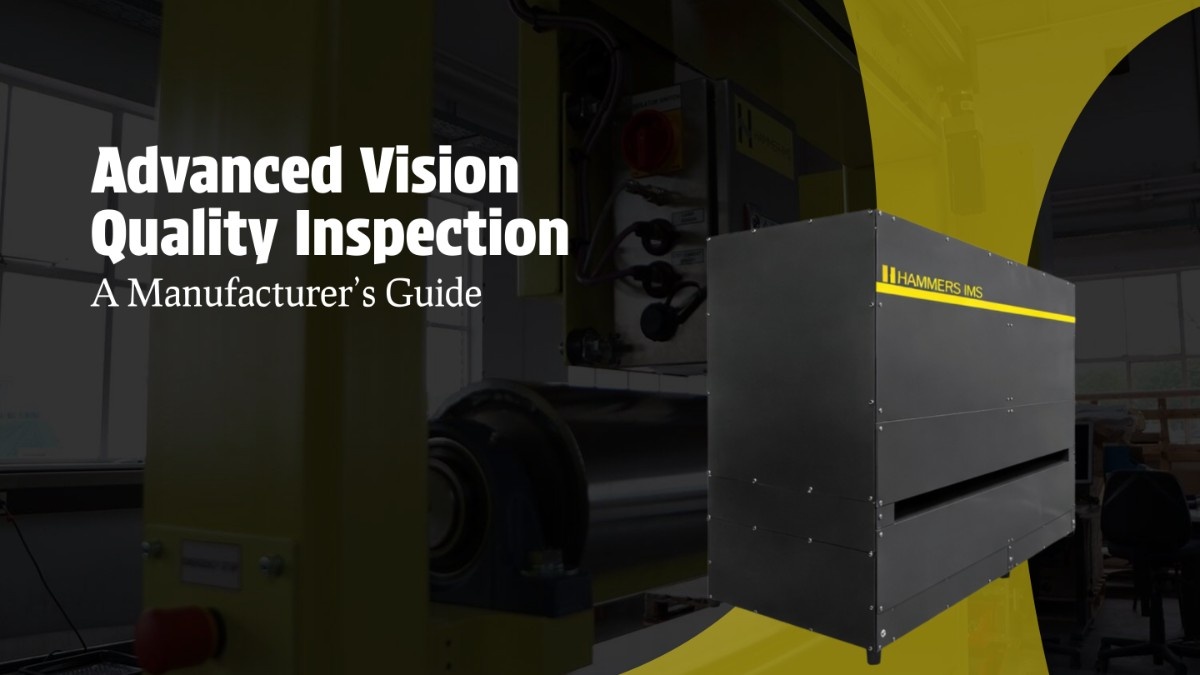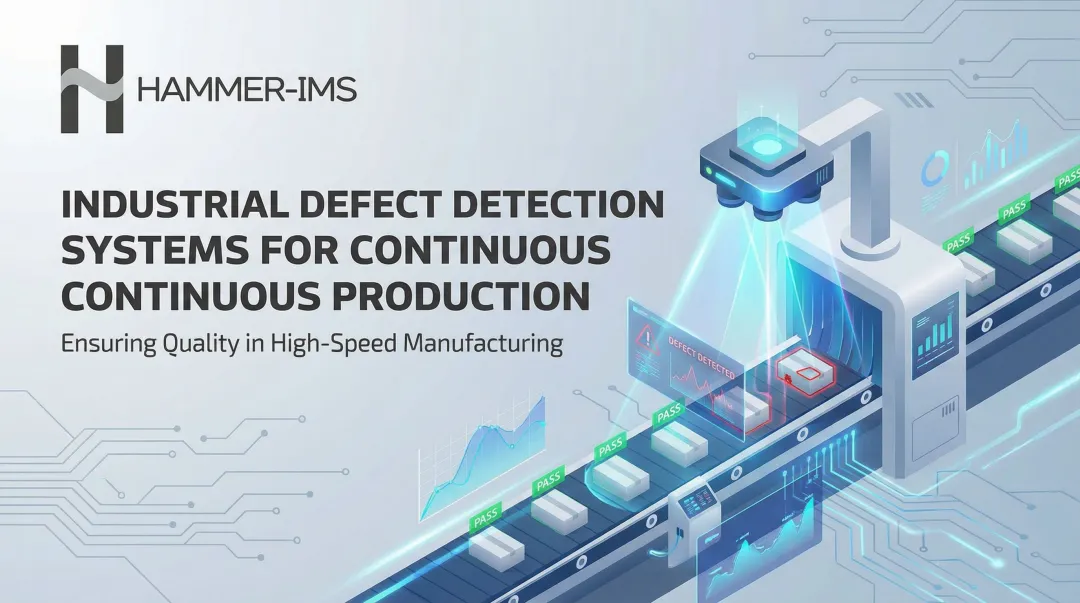
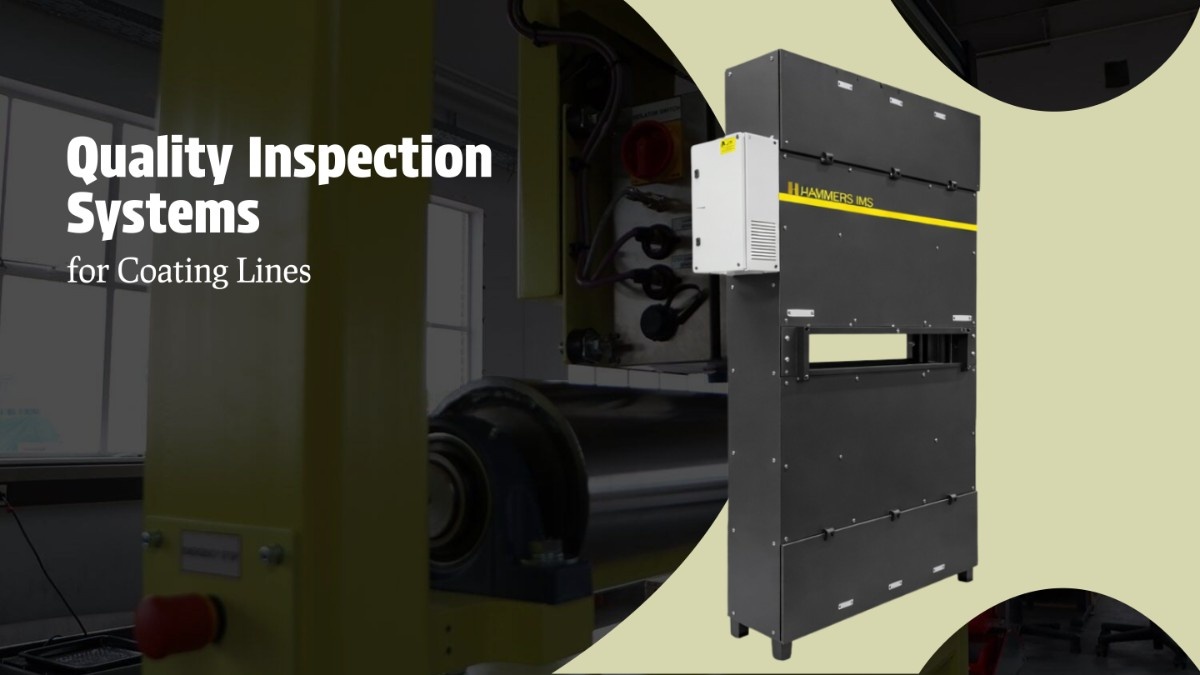
In many plants, roughly 25% of manufacturing defects come from process gaps that no one catches in time. On web and coating lines, that number gets even more costly because a single undetected streak, void, or coating irregularity can ruin hundreds of meters of material before an operator notices.
The flip side? Web inspection systems can cut scrap by up to 50% simply by detecting defects earlier. That’s the difference between staying ahead of drift and scrambling after it.
This is why manufacturers are turning to automated surface quality inspection. These systems don’t wait for defects to become obvious.
This guide explains what they are, how they work on real web and coating lines, and what to consider when selecting a solution that fits industrial conditions.
Key Takeaways:
Clear Surface Visibility: Advanced vision systems catch surface defects early, helping teams stabilize web and coating processes.
Engineered for High-Speed Lines: Films, foils, coatings, nonwovens, and composites benefit most from real-time, high-resolution inspection.
More Than Imaging: Modern systems combine lighting, optics, and AI to detect subtle changes operators can’t see at full line speed.
Smart Choices Drive Results: Material behavior, defect types, integration, and data needs determine how much impact the system delivers.
Hammer-IMS Advantage: Hammer-IMS provides automated surface quality inspection with AI, non-nuclear measurement, and strong industrial integration.
What Are Advanced Vision Systems?
If you’ve ever watched a defect flash across a web line and disappear before anyone can react, you already know why advanced vision systems exist. Advanced vision systems don’t wait for defects to get obvious.
They zoom in on the early signs: the slight texture shift, the weird reflection, the tiny dark spot that doesn’t belong. And they do it while your line is running at full speed, with zero pauses and zero excuses.
Think of them as the upgrade from “hoping operators spot issues” to actually seeing everything, all the time. If you're tired of surprises at the end of the line, this is where the real inspection begins.
But none of this works without the right building blocks. The performance of any advanced vision system comes down to a few core components. Let’s break them down.
Industrial Cameras (2D, 3D, Line-Scan)
These are the eyes of the system. 2D cameras catch surface details. 3D cameras read height, shape, and profile. Line-scan cameras handle high-speed webs without missing a pixel.
If your material moves fast or has tricky textures, the camera type decides how much detail you actually capture.
Engineered Lighting
Lighting makes or breaks inspection. The right angles and intensity expose defects you’d never see otherwise: streaks, voids, gloss shifts, scratches, fiber clumps.
Bad lighting = invisible defects.
Good lighting = reliable detection at full line speed.
Optics and Lenses
These shape what the camera sees. Focus, depth of field, field of view: small changes here can completely alter detection accuracy.
The right lens keeps images sharp even when the material vibrates, or the line geometry isn’t perfect.
Processing Hardware (PCs, GPUs, Edge Units)
Inspection is useless if the system can’t keep up. High-speed imaging requires strong processing; GPUs, edge processors, or industrial PCs that run AI and detection algorithms instantly.
No lag. No missed frames. No slowdowns when the line speeds up.
AI & Vision Algorithms
This is where the “smart” part happens. AI models learn what good material looks like, adapt to variations, and flag subtle defects that rule-based systems miss.
They reduce false alarms, detect drift earlier, and keep inspections stable across shifts.
Integration Interfaces (PLC, MES, SCADA)
Inspection is only valuable if it connects to the rest of the process. Clean integration lets you trigger alarms, log defects, automate reactions, and feed quality data into dashboards and reports.
If it doesn’t talk to your plant systems, it won’t improve your workflow.
Before you commit to anything, you need to look at a few make-or-break factors.
Key Considerations When Selecting an Advanced Vision System
Choosing an advanced vision system isn’t just about comparing camera specs or picking the latest AI tool. It’s about finding a setup that can keep up with your material, your line speed, and the defects that actually hurt your yield.
Here’s what to evaluate before investing.
Factor | What to Check | Real-World Impact |
Material Behavior | System tested on your exact material (films, foils, coatings, nonwovens). | Clear visibility of defects that are unique to your substrate. |
Defect Types | Ability to detect early-stage streaks, voids, scratches, texture shifts. | Fewer surprises downstream; earlier drift detection. |
Line Speed & Resolution | Imaging and lighting stable at full line speed. | No blurred frames or missed micro-defects. |
Integration | Clean PLC, MES, SCADA connectivity. | Real-time alarms and automated responses that operators trust. |
Data & Industry 4.0 | Trend tracking, defect logs, analytics. | Supports continuous improvement and shift-to-shift consistency. |
AI Capability | Adaptive models that learn from your production data. | Reduced false alarms; better detection on complex patterns. |
Environmental Fit | Hardware rated for dust, heat, vibration. | Stable imaging without constant recalibration. |
Operator Usability | Simple UI, fast recipe changes, minimal tuning. | Higher adoption, fewer workarounds, smoother operations. |
Advanced vision systems deliver their biggest impact when matched to the right materials and processes. Let’s look at where they’re used most effectively.
Practical Applications Across Industries
Web and coating lines may look similar from a distance, but every industry pushes vision systems in a different way. Some need flawless coating consistency. Others battle texture noise, glare, fiber movement, or fast-changing defect patterns.
Here are common applications across industries.
Industry / Material | What the Vision System Helps Detect | Why It Matters |
Films & Foils | Streaks, coating skips, pinholes, gloss shifts | Prevents roll defects and reduces rework in high-speed converting. |
Coating & Laminating Lines | Uneven layers, voids, adhesive errors | Stabilizes coating uniformity and avoids downstream failures. |
Battery Material Production | Coating defects, particle contamination, density irregularities | Supports strict quality specs and reduces scrap of costly materials. |
Packaging Materials | Print defects, surface marks, registration issues | Protects brand quality and minimizes customer complaints. |
Nonwovens & Hygiene Products | Fiber clusters, holes, texture variations | Ensures absorbency, strength, and consistent product performance. |
Technical Textiles | Pattern deviations, surface inconsistencies | Maintains functional integrity in performance-driven applications. |
Now let’s look at how Hammer-IMS brings these advanced vision capabilities into real production environments.
How Hammer-IMS Boosts Efficiency With Advanced Vision
Hammer-IMS develops vision systems designed for the realities of web and coating lines: fast speeds, wide materials, shifting textures, and environments where standard setups often lose stability. Their platforms help manufacturers detect defects earlier, maintain coating uniformity, and keep surface quality predictable across shifts.
Here’s how Hammer-IMS strengthens efficiency on continuous production lines:
Inline-ready vision for continuous materials
Built for films, foils, coated substrates, nonwovens, composites, and other materials where 100% surface coverage is essential.
Edge-Vision-4.0 inspection platform
High-resolution surface and edge monitoring paired with AI-driven defect detection. Supports early identification of streaks, voids, texture changes, gloss shifts, and repeating defect patterns.
Vision combined with non-nuclear measurement
Unique ability to integrate visual inspection with M-Ray thickness, basis-weight, and moisture measurement, providing a more complete view of product quality and process stability.
Stable mechanical architectures
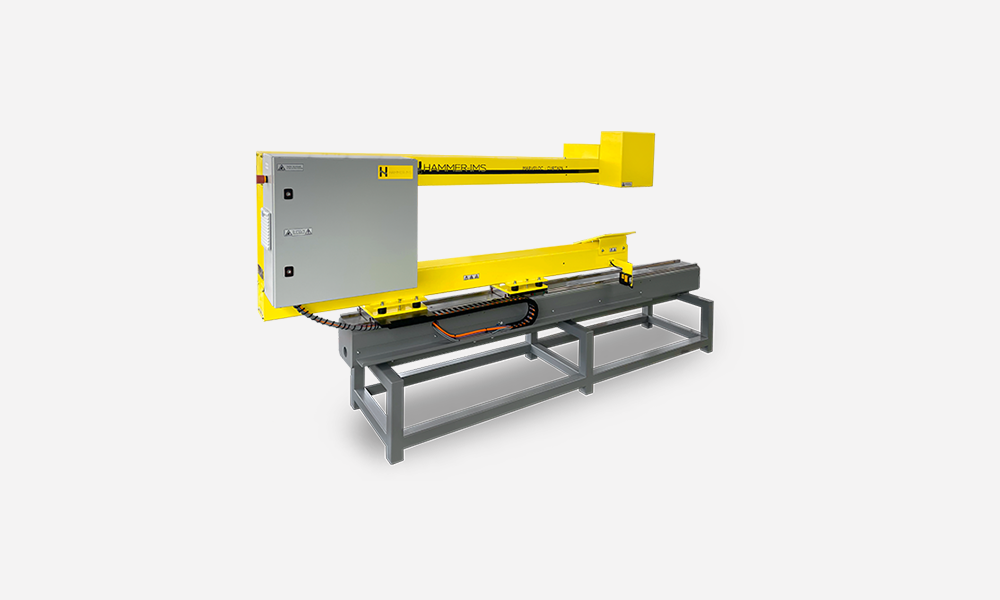
CURTAIN and C-frame platforms offer reliable, vibration-resistant imaging at high speed. Ideal for tight spaces and wide web materials.
Connectivity 3.0 for real-time actionability
Seamless PLC, MES, and SCADA integration. Supports alarms, defect mapping, dashboards, and automated responses that operators can use immediately.
Engineered for harsh production conditions
Lighting, hardware, and mounting designed to stay accurate despite dust, fibers, temperature variation, and line vibration.
Want to see the technology in action? Book a demo to evaluate how Hammer-IMS can support your web or coating line.
Conclusion
As web and coating lines push for higher speeds and tighter tolerances, the advantage goes to teams who can spot issues before they spread. Automated surface quality inspection isn’t just about finding defects, it’s about giving manufacturers the clarity and confidence to control their process in real time.
Hammer-IMS supports this shift with inspection technology built for continuous materials and the demands of modern production environments.
If you’re evaluating inspection options or planning upgrades to your quality workflow, reach out to our team to discuss the best-fit solution for your production line.
FAQs
1. How do I know if automated surface quality inspection is worth the investment for my line?
If you’re seeing recurring defects, unexplained drift, or high scrap during coating or converting, automated surface quality inspection can help identify issues earlier and stabilize output.
2. Will automated surface quality inspection increase operator workload?
No—well-designed systems simplify decision-making by providing clear alerts and minimal tuning. Most plants see a reduction in manual checks and fewer stop-and-inspect cycles.
3. Can automated surface quality inspection adapt to frequent product changeovers?
Yes. Modern systems store recipes, handle material variations, and use AI models that adjust to changing textures, colors, and coating behaviors.
4. How does automated surface quality inspection help with continuous improvement initiatives?
It generates defect logs, trend data, and drift indicators that teams can use to identify root causes and make long-term process improvements.
5. What if my environment is harsh: dust, fibers, vibration, or temperature swings?
Advanced platforms built for industrial use—including Hammer-IMS solutions—are engineered to stay accurate in demanding environments without constant recalibration.