Introduction
Industrial manufacturers face mounting pressure from tightening quality standards, sustainability mandates, and competitive efficiency demands. Many struggle with aging measurement infrastructure—nuclear gauges requiring expensive licensing, contact-based probes causing line stoppages, and static threshold systems generating high scrap rates. The global smart sensors market reached $48.1 billion in 2024 and is projected to grow to $105.9 billion by 2029, signalling that industries are rapidly upgrading to intelligent, adaptive measurement solutions.
Tailored sensor technology marks a departure from generic off-the-shelf devices: these are sensors engineered for specific measurement parameters, operating environments, and production line conditions. In continuous web production—whether extruding plastic films, coating nonwovens, or monitoring steel thickness—precision measurement directly determines material waste, uptime, and quality consistency.
This article covers the key emerging innovations in tailored sensing, from non-contact measurement principles to AI-driven closed-loop control, and what they mean for manufacturers across plastics, textiles, steel, and composites.
Key Takeaways
- Tailored sensors deliver adaptive, application-specific measurement designed for demanding industrial environments
- Leading trends span AI-integrated smart sensors, non-contact measurement, and IIoT sensor fusion for closed-loop control
- Key drivers include Industry 4.0 adoption, sustainability regulations, and elimination of radioactive measurement methods
- Purpose-built solutions deliver the clearest gains in nonwovens, textiles, plastics, automotive, and medical manufacturing
- Early adopters achieve documented improvements in material efficiency, uptime, and quality consistency
AI-Integrated and Adaptive Sensor Systems
What AI-Integrated Sensors Are
AI-integrated sensors embed or connect to machine learning algorithms that interpret measurement data, detect anomalies, and adjust sensitivity parameters in real time. This goes well beyond static thresholds. Rather than simply flagging when thickness exceeds a preset limit, these systems learn baseline process behaviour, identify subtle deviations indicating emerging quality issues, and trigger corrective action before defects reach the end product.
How This Manifests in Manufacturing
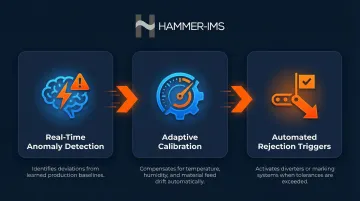
On continuous production lines processing web-based materials—nonwovens, plastic films, coated textiles—AI-driven sensors monitor inline quality continuously. The systems perform:
- Real-time anomaly detection: Identifying deviations from learned production baselines automatically
- Adaptive calibration: Compensating for environmental drift (temperature, humidity, material feed variations) without manual recalibration
- Automated rejection triggers: Activating diverters or marking systems when sensor-detected deviations exceed tolerances
56% of global manufacturers now use AI in maintenance or production operations, demonstrating rapid adoption of intelligent measurement platforms.
Real-World Application Examples
Automotive stamping: A Tier-1 supplier implemented AI-driven process control, reducing micro-stops by 82% and increasing OEE from 68% to 81%, delivering £1.09 million in annual savings per line with 14-week ROI.
Textile manufacturing: AI catches defects within 2–5 metres compared to 30–60 metres for manual inspection, resulting in 65% reduction in defect-related fabric rejection.
Why This Trend is Accelerating
The global AI sensor market is projected to reach $17.2 billion by 2028, growing from $2.3 billion in 2022 at 41.6% CAGR. For manufacturers still relying on static thresholds, that growth curve signals a widening gap in process control capability.
Why Legacy Sensor Setups Fall Behind
Manufacturers running legacy sensor setups without adaptive intelligence face widening quality variance and higher scrap rates. AI-augmented counterparts operate with tighter process control, faster anomaly response, and lower material giveaway — gains that compound quickly across high-throughput production environments.
Contactless and Non-Destructive Measurement Technologies
The Core Shift Away from Contact and Nuclear Systems
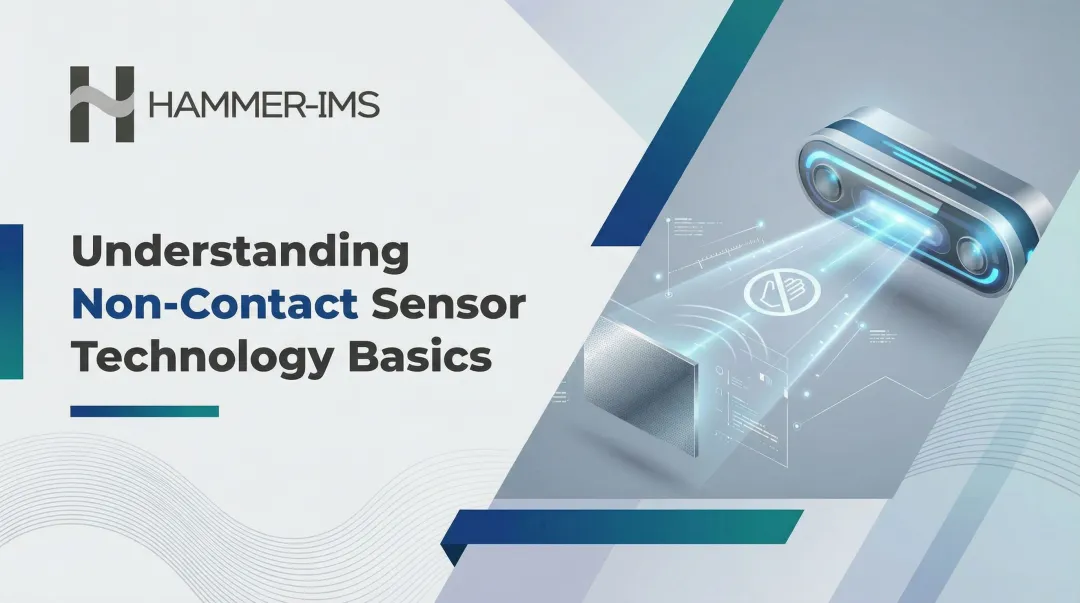
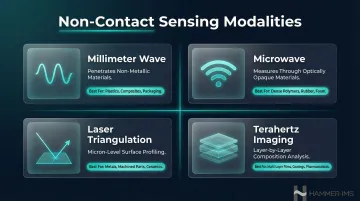
Industrial measurement is transitioning away from contact-based probes and nuclear/radioactive gauge technologies toward non-contact sensing modalities:
- Millimeter wave: Penetrates non-metallic materials without physical contact
- Microwave: Measures through optically opaque materials
- Laser triangulation: Provides micron-level surface profiling
- Terahertz imaging: Enables layer-by-layer composition analysis
Each modality is calibrated for specific material types and process conditions, delivering precision impossible with one-size-fits-all solutions.
The Safety and Regulatory Driver
Nuclear and radioactive measurement gauges face strict regulatory burdens. The U.S. NRC charges $2,800 annual fees for industrial gauges, plus application fees, mandatory leak testing every six months, and disposal protocols. The EPA's Alternative Technologies Initiative actively supports replacing sealed radioactive sources with non-nuclear alternatives to reduce sources in the economy.
European EURATOM directives require specific licensing for high-activity sealed sources, mandating minimum staff competencies, emergency procedures, and adequate disposal facility management—administrative burdens that contactless alternatives eliminate entirely.
Industry-Specific Contactless Adoption
Contactless sensing addresses distinct challenges across manufacturing sectors:
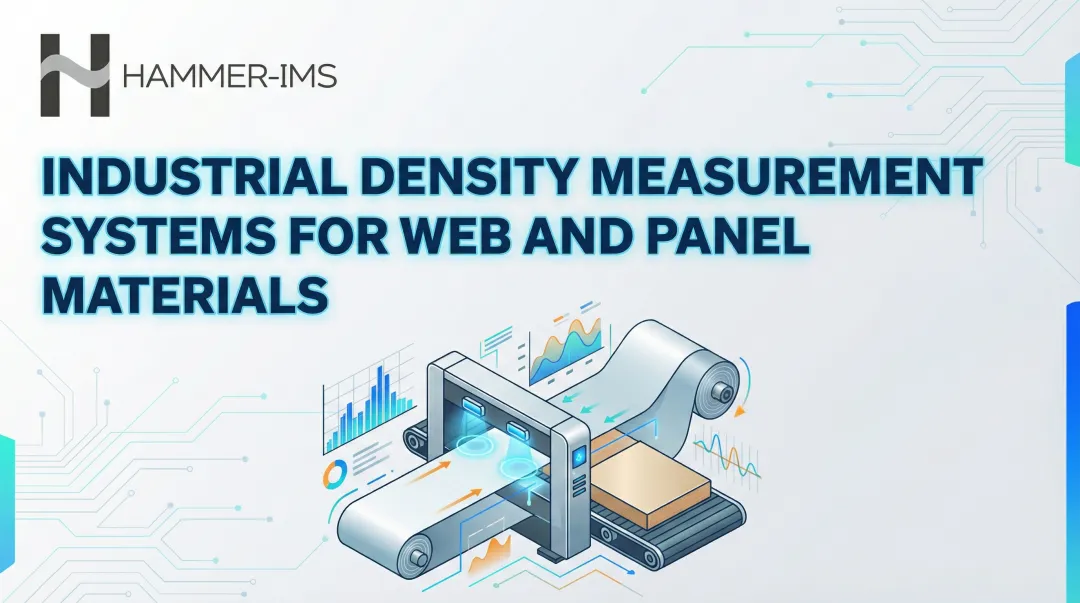
- Nonwovens and textiles: Basis weight and thickness measurement on moving webs at high speed, with no sensor wear
- Plastics extrusion: Layer-by-layer film profiling across the full sheet width, catching variations single-point nuclear gauges miss
- Construction materials: Coat weight monitoring on bitumen products and mineral wool without damage or contamination risk
Hammer-IMS M-Ray Technology in Action
Hammer-IMS's M-Ray technology (built on 60 GHz millimeter wave principles) is a practical example of this shift. The system measures materials up to 10,000 gsm with standoff distances reaching 30 cm, enabling contactless measurement on thick nonwovens, coated textiles, and multi-layer composites where nuclear gauges previously dominated.
That standoff distance doesn't compromise accuracy: the system achieves 1 gsm measurement precision, comparable to beta gauges, without requiring any radioactive licensing.
Operational Advantages Beyond Compliance
Regulatory compliance is the headline driver, but the operational benefits are equally compelling:
- Eliminates sensor wear: No contact means no degradation from abrasive materials or high temperatures
- Reduces line stoppages: No sensor maintenance interruptions
- Enables measurement on fragile materials: High-speed films, thermally sensitive substrates, and medical-grade nonwovens measured without product integrity degradation
- Maintains accuracy across material properties: Unaffected by colour, gloss, transparency—critical for pigmented plastics and dyed textiles
Sensor Fusion and IIoT Integration for Closed-Loop Production Control
Defining Sensor Fusion in Industrial Context
Sensor fusion combines data streams from multiple sensor modalities—thickness, basis weight, temperature, tension—into a unified measurement picture. Rather than treating each parameter independently, fusion platforms correlate measurements to reveal process relationships invisible to single-sensor monitoring.
For example, thickness variation combined with temperature data may indicate die bolt issues, while basis weight changes correlated with line speed reveal material feed inconsistencies.
How IIoT Connectivity Elevates Sensor Fusion
When fused sensor data transmits in real time via networked platforms, it feeds directly into production control systems, triggering automatic adjustments to:
- Adjusts extrusion speed to hold target thickness as material viscosity shifts
- Corrects coating volume by modulating pump flow against basis weight deviations
- Compensates material feed rate for density variation across raw material batches
This creates closed-loop control that continuously corrects production toward specification without manual intervention.
Hammer-IMS Connectivity 3.0 Platform
Hammer-IMS's Connectivity 3.0 exemplifies IIoT-enabled sensor fusion. The platform integrates M-Ray sensors (measuring basis weight and thickness) with complementary measurement technologies, providing unified visualization and control. Remote access to real-time data, data logging, and analytics integration lets manufacturers link sensor intelligence directly to production decisions.
The system supports industrial protocols (Modbus TCP/IP, OPC UA, PROFINET), slotting into existing control architectures. Automated adjustments to die bolts, pump flow, and line speed follow directly from measurement feedback—no manual handoff required.
The Business Significance
Documented outcomes from closed-loop sensor integration show measurable returns:
- Automated die adjustments save up to 101,500 kWh annually
- Basis-weight control valves eliminate 15,000 kg of stock waste per month
- Tighter thickness tolerances reduce rework and downstream scrap
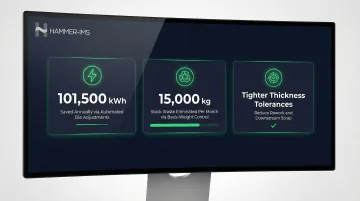
These figures make the ROI case concrete: energy savings, material recovery, and narrower tolerances each contribute a distinct line item to the bottom line.
What's Driving Tailored Sensor Innovation in Industrial Manufacturing
Industry 4.0 and Automation Adoption
The shift to smart factories demands sensors that communicate, adapt, and integrate with automated control architectures. The global Industrial IoT market reached $151.2 billion in 2024 and is projected to reach $222.6 billion by 2029, reflecting sustained investment in connected industrial infrastructure.
Manufacturers need sensors that do more than measure—they must feed data to MES systems, trigger autonomous process adjustments, and enable predictive maintenance through pattern recognition across production assets.
Sustainability Mandates and Material Efficiency Goals
ESG targets and regulatory pressure to reduce waste push manufacturers toward precision measurement tools that:
- Reduce material giveaway through tighter thickness tolerances, leaving less excess on every run
- Cut energy consumption by enabling optimized, data-driven process control
- Eliminate nuclear gauges, directly supporting EU sustainability reporting standards (ESRS E5) that require disclosure of radioactive waste generated
Manufacturers face increasing scrutiny on environmental performance. The revised EU Industrial Emissions Directive mandates Environmental Management Systems and binding limits based on Best Available Techniques—making measurement precision a compliance requirement, not just a cost consideration.
Cost Pressures and Competitive Dynamics
In high-throughput industries like nonwovens, plastics, and textiles, marginal improvements in measurement accuracy translate directly into material cost savings at production scale. For continuous processes running 24/7, even a 1% reduction in material waste delivers substantial annual savings.
Tailored sensors are ROI-driven investments. Advanced measurement systems pay for themselves through reduced scrap, tighter production tolerances, and lower raw material consumption — gains that compound across every production shift.
Workforce Constraints and Remote Operations
These cost pressures arrive alongside a widening skills gap. Labour shortages accelerate demand for sensors that:
- Reduce manual inspection requirements
- Deliver remote data access across multi-site operations
- Minimize need for on-floor calibration expertise
The U.S. manufacturing sector reported 439,000 job openings in February 2026, highlighting the persistent talent gap. Automated measurement with remote monitoring enables leaner production teams to maintain higher quality standards.
How Tailored Sensors Are Reshaping Industrial Manufacturing
Operational Impact
Inline tailored sensors are replacing offline lab testing cycles—shifting quality control from retrospective to real-time. Rather than waiting hours for batch samples to return from the laboratory, manufacturers receive continuous measurement data that enables:
- Adjust process parameters within seconds of deviation detection
- Maintain specifications throughout production runs rather than correcting between batches
- Detect and correct issues before significant material waste occurs
Business Impact
Manufacturers investing in application-specific sensor platforms achieve:
- Tighter tolerances that reduce excess material applied to meet minimum specifications
- Real-time feedback that prevents off-spec production from reaching the scrap pile
- Continuous measurement logs that support ISO, automotive, and customer quality reporting requirements
These gains translate directly to the bottom line. Material costs typically represent 40–60% of production expenses in continuous manufacturing — which makes waste reduction one of the highest-leverage investments available to process engineers.
Workforce Impact
The financial and quality case for tailored sensors is clear — but the workforce implications are just as significant. Systems with remote connectivity and automated alerting reduce dependence on highly specialized on-site measurement expertise. Operators receive clear alerts when processes drift, with automated systems handling routine calibration and adjustment.
This enables leaner production teams to maintain higher quality standards — critical given persistent manufacturing labour shortages across developed economies.
Future Signals for Tailored Sensor Technology in Industrial Manufacturing
Emerging Technologies to Watch
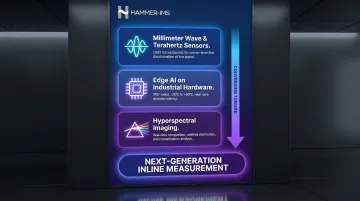
Three technologies are converging to reshape what inline measurement can do at production speeds:
- Millimeter wave and terahertz sensors — Terahertz time-domain systems now achieve 1,600 traces/second for micron-level film discrimination, enabling layer-by-layer composition analysis at line speed. As component costs fall, these capabilities will move beyond premium applications into mainstream manufacturing.
- Edge AI on industrial-grade hardware — Systems with IP67-rated enclosures rated for -25°C to +60°C are commercially available today. Processing analytics directly at the sensor eliminates cloud dependency and cuts decision latency to near-zero.
- Hyperspectral imaging on the production line — Next-generation systems will go beyond geometry to assess material composition, additive distribution, and contamination in real time — delivering insights that previously required laboratory spectroscopy.
Scenarios for the Next 1–3 Years
The near-term outlook points to three structural shifts manufacturers should plan for now:
- Closed-loop systems become standard — Tailored sensors will govern material input adjustments autonomously, with AI determining process parameters from real-time measurements rather than scheduled sampling.
- Non-nuclear measurement moves from preference to requirement — Belgium is already legislating the phase-out of nuclear sensing in breweries. Regulatory pressure is expected to spread across industries and jurisdictions, making non-nuclear alternatives the baseline expectation rather than the premium option.
- New material categories demand new calibration — Bio-based composites, medical nonwovens, and recycled-content plastics each introduce variable material properties that off-the-shelf sensors cannot reliably handle. Purpose-engineered measurement will become a qualification requirement, not an upgrade.
- Sensor data feeds sustainability reporting — As Scope 3 emissions accounting and material waste reporting tighten, inline measurement systems will increasingly serve as the primary data source for compliance documentation.
Strategic Note
The practical barrier to entry for tailored sensor technology is not cost — it is calibration time and process knowledge. Manufacturers that pilot these systems now accumulate the measurement baselines and integration experience that cannot be shortcut later. By the time closed-loop automation and non-nuclear compliance become industry defaults, those baselines will already be built in.
Frequently Asked Questions
What are the different types of sensor technology?
Major categories include contact vs. contactless, optical (laser, vision), acoustic (ultrasonic), electromagnetic (millimeter wave, microwave), capacitive, and piezoelectric. Tailored industrial sensor solutions often select or combine specific types based on material properties— for example, millimeter wave for thick nonwovens or laser triangulation for smooth plastic films.
What is tailored sensor technology and how does it differ from off-the-shelf sensors?
Tailored sensors are engineered or configured for a specific measurement application, material type, or operating environment—delivering accuracy and integration capability that generic sensors cannot achieve. For example, measuring hot extruded thermoplastic immediately after chilling requires contactless technology unaffected by temperature, colour, or transparency—capabilities standard sensors lack.
How is AI being used in industrial sensor systems?
AI enables real-time anomaly detection, adaptive calibration, and predictive quality control in industrial environments. Machine learning algorithms learn baseline process behaviour, automatically flag deviations indicating emerging quality issues, and trigger corrective actions, converting raw sensor data into production decisions that require no manual interpretation.
What are the benefits of non-nuclear measurement technology in manufacturing?
Non-nuclear systems eliminate radioactive licensing, disposal requirements, and radiation exposure risks while delivering equivalent or superior measurement precision. They also remove material contamination concerns and reduce total cost of ownership by cutting the regulatory compliance overhead tied to radioactive materials.
What industries benefit most from custom sensor solutions?
High-throughput, quality-sensitive industries gain most: nonwovens, textiles, plastics film and sheet, steel, automotive, and medical device manufacturing. Each sector demands precise measurement of specific properties — basis weight, thickness, or coat weight — where off-the-shelf sensors fall short and tailored solutions deliver clear ROI.
How does sensor fusion improve industrial process control?
Combining data from multiple sensor types creates a more complete picture of production conditions, enabling more accurate closed-loop corrections. Correlating thickness with temperature and line speed, for instance, reveals root causes of variation that any single measurement would miss — allowing targeted adjustments instead of trial-and-error.