What is mmWave technology?
Millimeter wave (mmWave) technology uses electromagnetic waves with wavelengths between 1-10mm, operating in the 30-300 GHz frequency range. In industrial measurement applications, mmWave technology enables contactless, non-destructive analysis of material properties like thickness and density. Unlike nuclear or X-ray methods, mmWave is completely safe, non-radioactive, and requires no special licensing or regulatory compliance.
How does millimeter wave technology work?
Millimeter wave measurement works by transmitting high-frequency electromagnetic waves through or at a material. The sensor analyzes how these waves interact with the material—measuring reflection, transmission, and absorption patterns. These interactions reveal precise information about thickness, density, composition, and internal structure. The technology can penetrate opaque materials, detect hidden layers, and operate at speeds exceeding 3 kHz for real-time process control.
What materials can M-Ray technology measure?
M-Ray technology measures a wide range of industrial materials including plastics (PE, PP, PMMA, PC), textiles and nonwovens, construction materials (MDF, OSB, plywood, mineral wool, gypsum board), paper and pulp products, coatings, and composite materials. The technology performs consistently regardless of material color, opacity, or surface finish, and can even characterize materials with filling agents.
How accurate are M-Ray measurement systems?
M-Ray systems deliver exceptional accuracy with the ability to reduce production thickness margins by up to 5% according to international standards. The multi-sensor approach provides uniform coverage across the entire material width, detecting local deviations as small as individual extrusion components. High measurement rates (multiple kHz) ensure no defects are missed even at production speeds up to 500 meters per minute.
Can M-Ray technology be integrated into existing production lines?
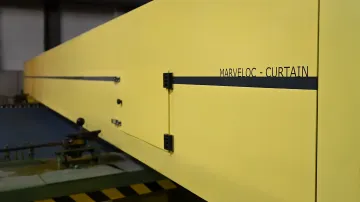
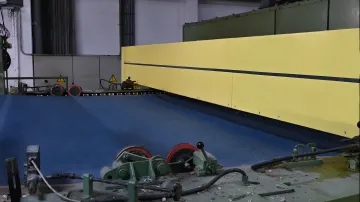
Yes, M-Ray systems are designed for seamless integration. Hammer-IMS offers turnkey Marveloc-CURTAIN installations for new or upgraded production lines, compact OEM modules for machine builders to integrate into their equipment, and flexible mounting options with fixed or mobile sensors. Complete API documentation, reference designs, and Industry 4.0 IoT connectivity ensure compatibility with existing quality control systems.
What are the advantages over nuclear measurement methods?
M-Ray technology eliminates all radiation hazards and regulatory compliance requirements associated with nuclear gauges. There are no licensing fees, no radiation safety training requirements, no disposal concerns, and personnel can work 24/7 without exposure limits. The clean technology is environmentally sustainable, easier to maintain, and delivers comparable or superior accuracy without the safety and regulatory burdens.
How quickly can M-Ray systems detect production defects?
M-Ray systems operate at measurement rates exceeding 3 kHz, providing real-time feedback with minimal latency. This enables immediate detection of thickness variations, basis weight anomalies, welds, wrinkles, and other defects. The rapid response allows closed-loop production adjustments, preventing defective material from continuing down the line and reducing waste significantly.
What support does Hammer-IMS provide for M-Ray installations?
Hammer-IMS provides comprehensive support including turnkey installation services, custom configuration for specific production requirements, training on system operation and software, ongoing technical support, remote monitoring capabilities through IoT connectivity, and system upgrades to expand capabilities. Our international presence across multiple countries ensures local support backed by global expertise in millimeter wave measurement technology.